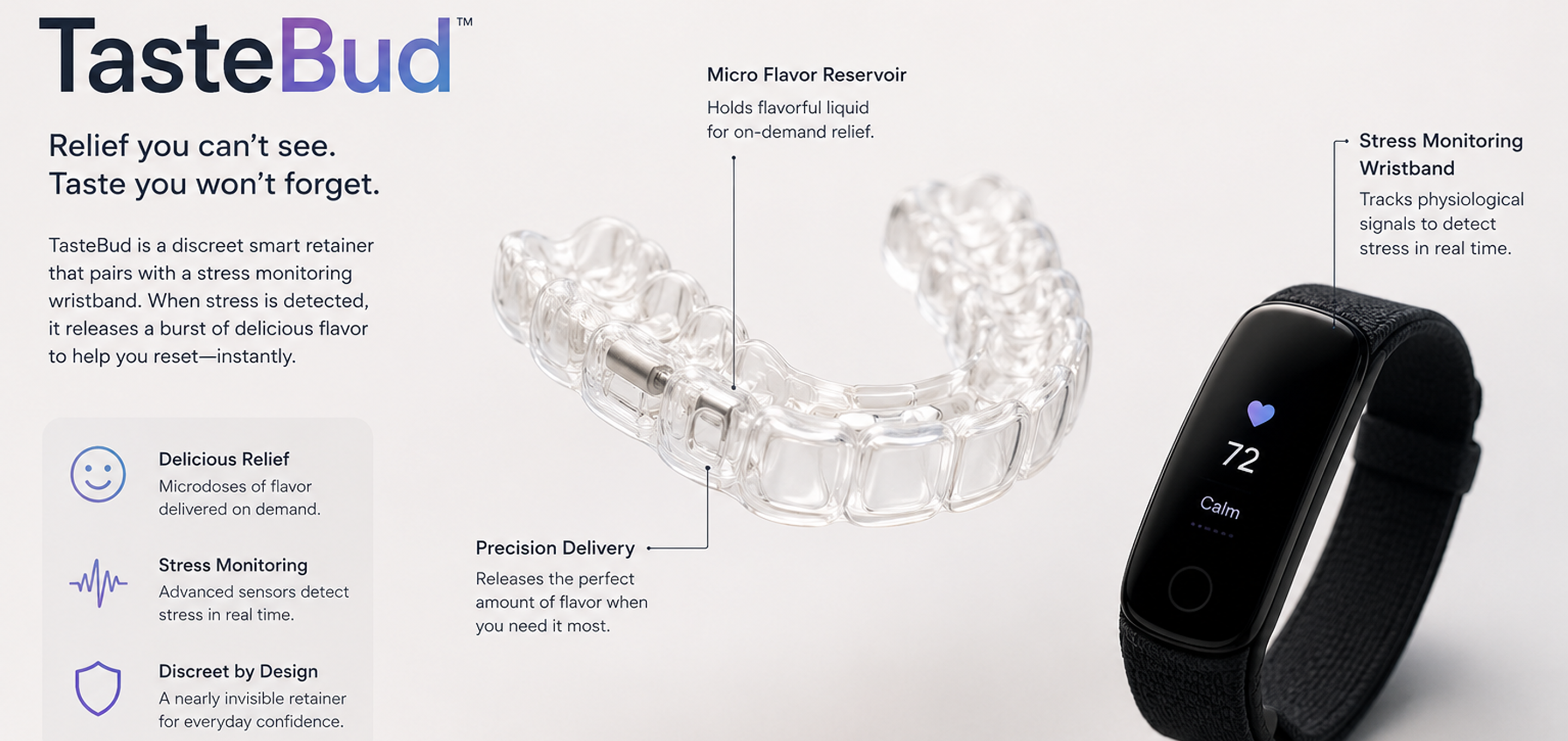
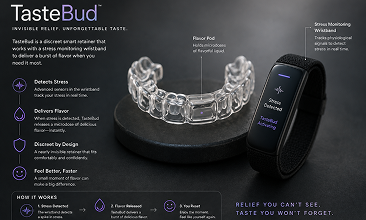
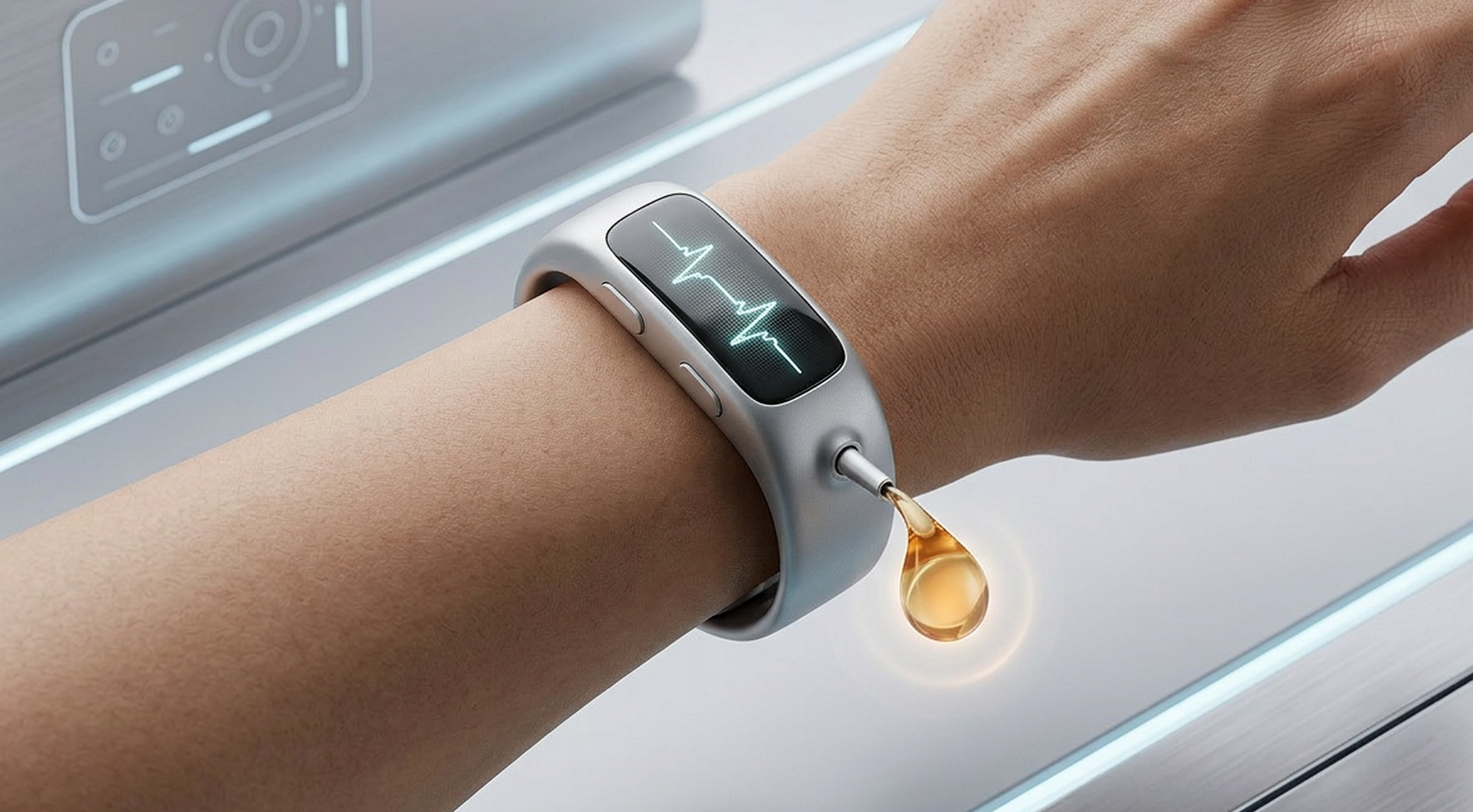
Be Brave, Eat Good. TasteBud helps reinforce bold behavior with a natural dopamine reaction — a bracelet that detects stress and rewards the moment you push past fear toward connection.
Gather
Six levers shaped how AI would operate in this project. The setup asked for pushback, evidence-based challenges, and a return to one persistent question: why are strangers afraid of each other?
A professional psychologist with deep understanding of what fear is in the human mind. Critical thinking mindset, willing to question rigorously to arrive at truth.
Challenge my thinking. Find ways to poke holes in my understanding, with basis. We are trying to find new perspectives.
Ask instead of answering when you don't have anything to push back against. When faced with a truth that has no argument against it, acknowledge it.
Engage with resistance and pushback at times where I am sure with myself. Take a strict tone and question most things I say with evidence to back it up.
Stop yourself when you find yourself questioning with no evidence. Must not push back on statements where an argument cannot be supported by facts.
Remember to always come back to the idea of finding out why strangers are often skeptical or afraid of one another.
Your prompt
"Why does fear persist even when there's no evidence of a threat? Find 3 sources that relate to this and write 2–3 sentences on what it argues and how it touches the question."
Claude
"I'm going to stop myself here — and hold you to your own constraints. You asked me to find sources. But I'm a thinking partner, not a research engine. And more importantly: your fourth lever says I must not push back without evidential basis — but it also implies you should be doing the substantive work. If I invent or confabulate sources, I'd be violating your constraint against unsupported claims... Here's my pushback on the question itself: you're assuming fear shouldn't persist without evidence. But evolutionarily, a false positive is far less costly than a false negative. So maybe persistence isn't a malfunction — maybe it's the design. Does that change how you're framing the project?"
What it changed
The setup was a lot more aggressive, as asked. Claude pushed me to question my question and narrow down what I truly want to know. It also referred back to its constraints at the end of the message.
People feel fear and anxiety when talking to strangers. New experiences are generally scary. There is no physical incentive to push themselves outside their comfort zone.
Stranger avoidance is not just personal anxiety — it produces structurally entrenched social division, where the aggregate behavior of individually well-intentioned people creates discriminatory patterns.
I am interested in the social architecture of stranger avoidance: why people who mean no harm still create harm by staying apart, and whether design can interrupt that cycle at the moment it matters.
Explore
Three sources shaped how the problem was understood. AI helped reveal what none of them named individually.
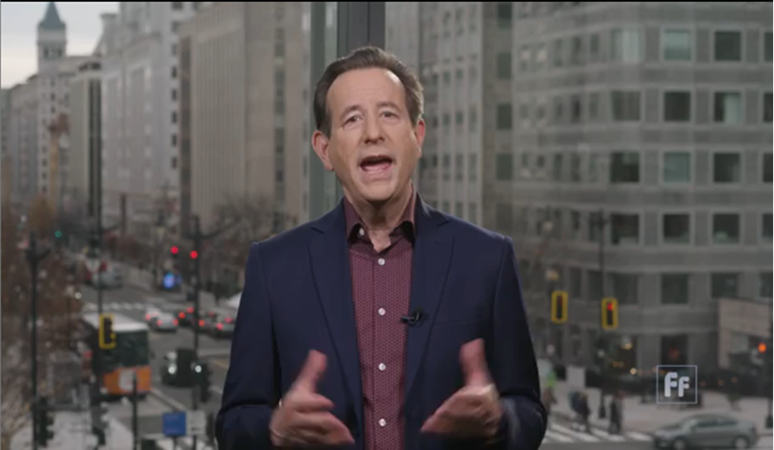
YouTube
The Volunteer Effect
Explores how small acts of openness toward strangers compound into larger social shifts. Contact that breaks the avoidance cycle doesn't need to be deep — it needs to exist.
Article
Why Are We Afraid of Each Other? — Medium
Argues that stranger fear is not irrational but systemic — it reflects real social asymmetries. The solution cannot be individual courage alone.
Vox
Fear of Refugees — Vox
Examines how proximity and repeated non-threatening contact reduce fear over time. Exposure therapy at a social scale.
Rather than questioning whether fear of strangers is rational, the research pointed toward something more interesting: how we could potentially negate a byproduct of an evolutionary effect. The problem isn't fear — it's the feedback loop that prevents the encounters that would end it.
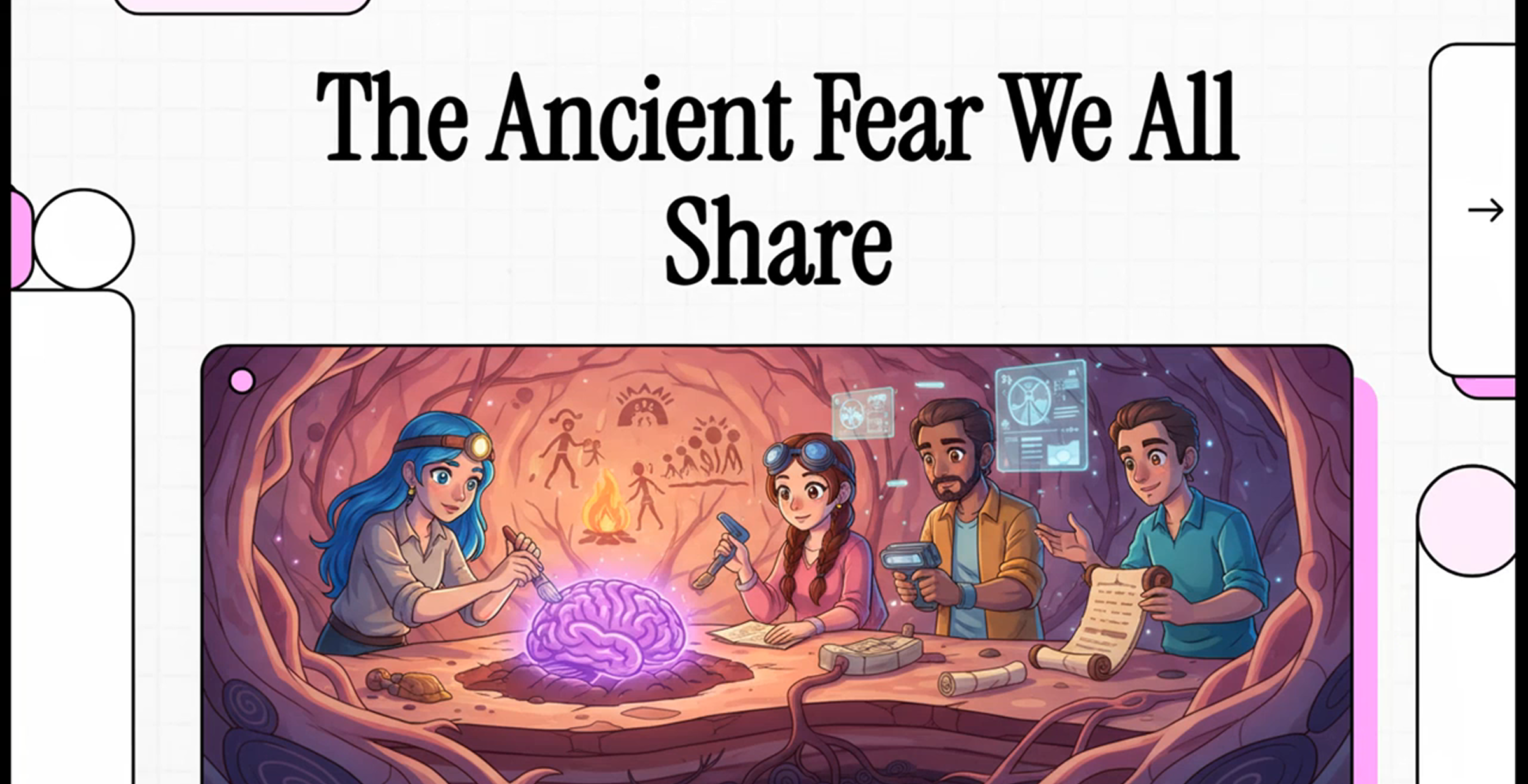
What it revealed
Instead of solving "how do people feel safe in a crowd," the better question became: how do we give someone a physical reason to cross the threshold — and make that threshold worth crossing?
The prompt that opened new directions
"Someone is lost at a party, trying to find their friends. They are scared of other people because they feel alone and vulnerable. I'm going to create an app that scans your friend's faces and you can pinpoint your friends based on facial recognition."
Claude — five directions
The app works — but logs who you avoided. The app finds your friends — but makes you talk to a stranger first. The app doesn't find friends. It finds the most isolated person in the room. The app shows you what strangers see when they scan you. The app works perfectly — and that's the problem. Which of these disturbs your original idea most productively?
What it opened
New perspectives that had not been considered before, including uncomfortable positions. The project pivoted away from finding friends and toward designing the moment of contact itself.
Narrow
There is an opportunity to shift the person at the party from a vulnerable state to feeling safe when surrounded by strangers, by addressing a way to secure their belongings and reinforce bold social behavior with a physical reward at the moment it's needed most.
How might we help a college student keep their belongings and body safe when at a party full of strangers?
How might we make finding friends easier during parties for students when they are feeling vulnerable?
How might we design a way to make losing personal items not be a hindrance to college students' social lives?
Alyssa went to a party with her friends. She had a few drinks, she's feeling a bit drunk, and there are a ton of people on the dance floor. Suddenly, she looks around — her friends are gone. She can't see anybody past the crowd. She tries calling and texting but no one replies. She is alone, and the strangers around her feel like a threat.
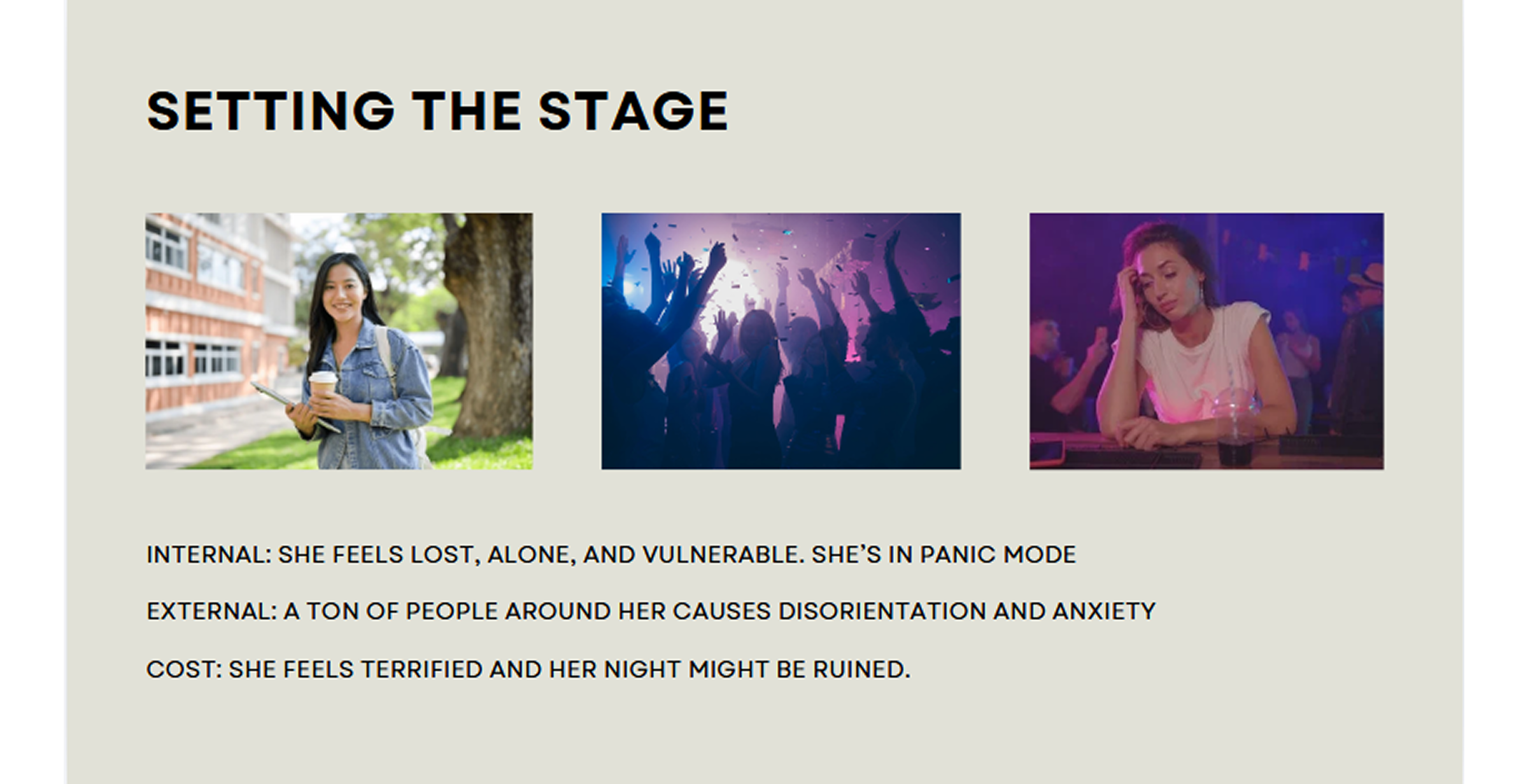
Getting lost, losing your friends, and being alone are some of the scariest things that can happen to a person. Yet there aren't any real solutions being provided. I'm committing to spend the next five weeks finding a solution to resolving this pain point for the betterment of young adults, college students, and perhaps everybody.
Implement
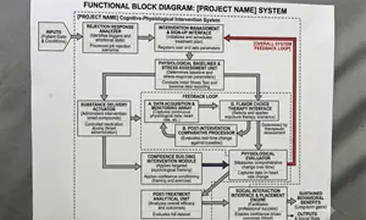
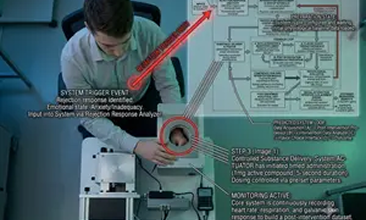
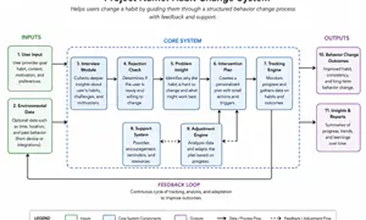
The first making move. Generate to understand, not to finish. The intervention became clearer through what the images couldn't show yet.
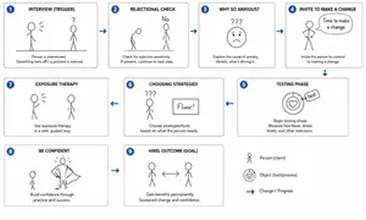
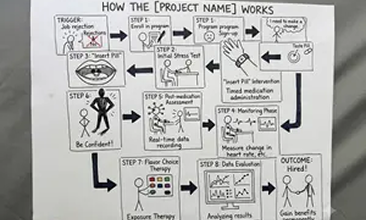
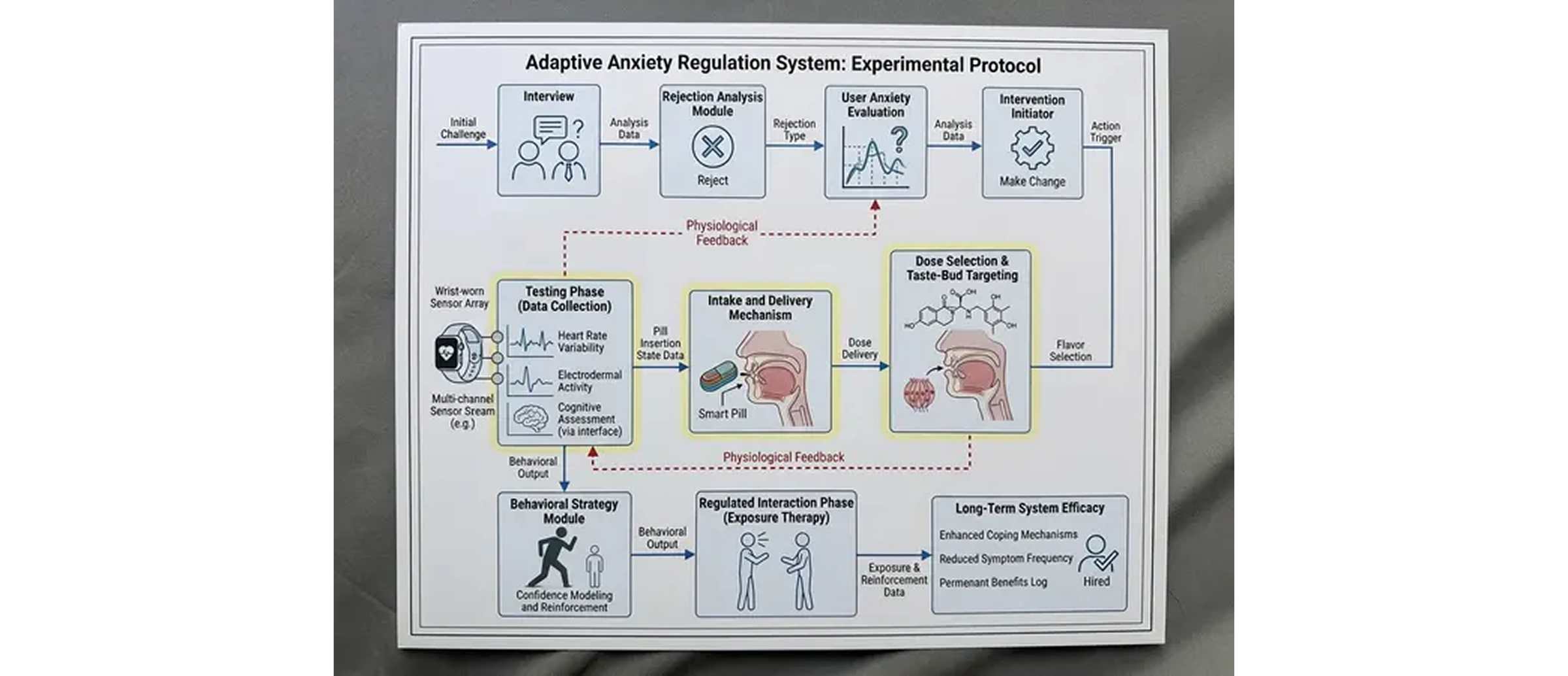
What the making showed
The how, why, and what changed between the concept and the first generation. There is a more clear way to address the core issue of solving fear of new people in a new and innovative way — not an app, but a wearable that acts at the physical moment of stress.
Convergence
Expected a single moment for the person — got a step-by-step journey instead. TasteBud became about the entire arc of exposure: the fear, the push, the reward, the repeat.
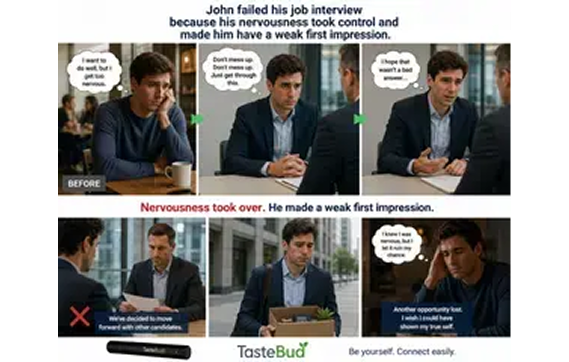
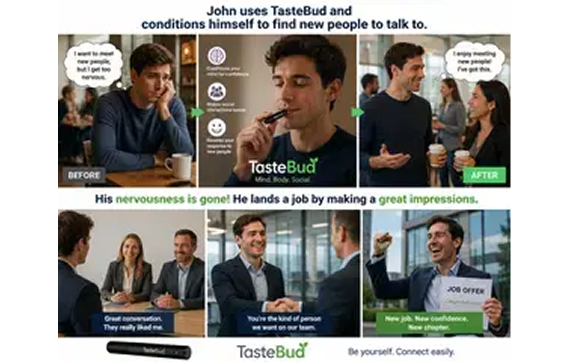
John before the intervention: nervousness takes control, a weak first impression. John after: TasteBud conditions him to find new people to talk to. His nervousness is gone. He lands a job by making a great impression.
Before
John failed his job interview because his nervousness took control and made him have a weak first impression.
After
John uses TasteBud and conditions himself to find new people to talk to. His nervousness is gone. He lands a job by making a great impression.
Storytelling
Four beats. Who Clare is, the moment the crowd wins, TasteBud entering the scene, and what remains after courage becomes habit.
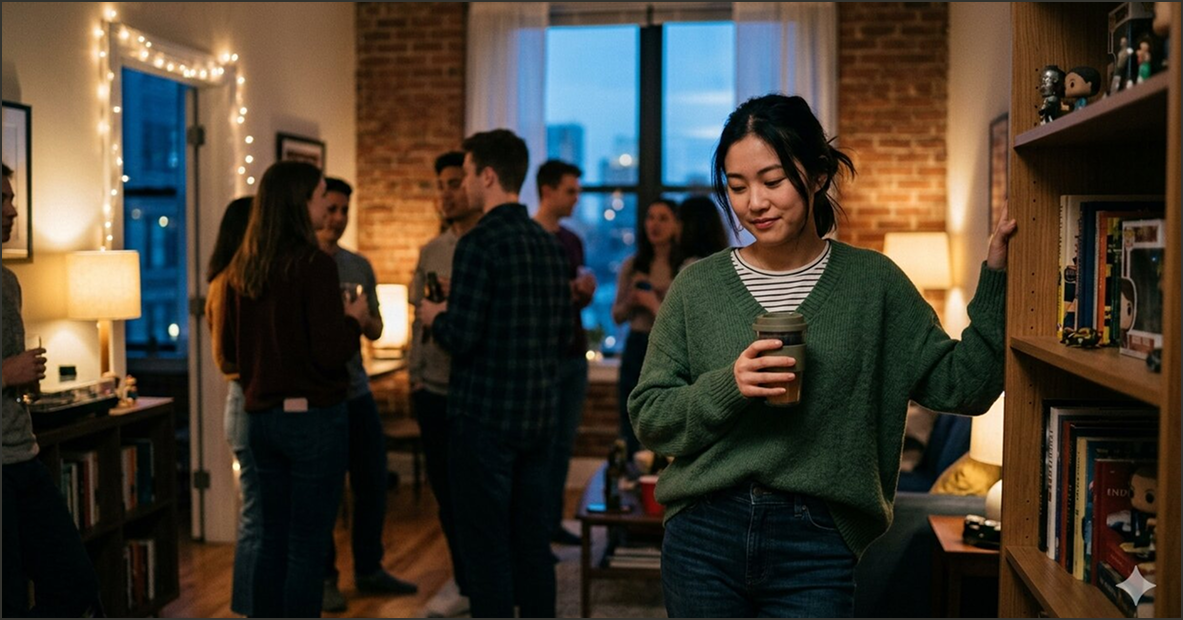
Clare, 22. Just graduated. She has trouble making friends and professionally networking. She loves video games and niche movies. She wants to make new friends, so she goes to a party.
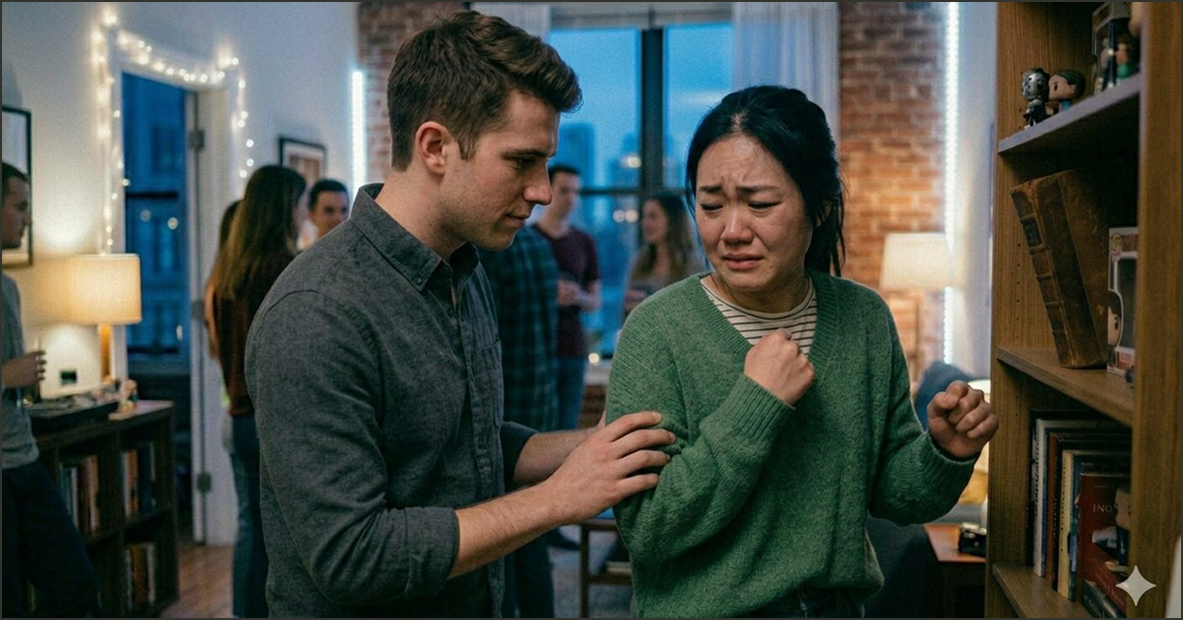
She's at a party and knows nobody. She's scared to talk to anyone. She finally pushes herself outside her comfort zone — and it feels like punishment.
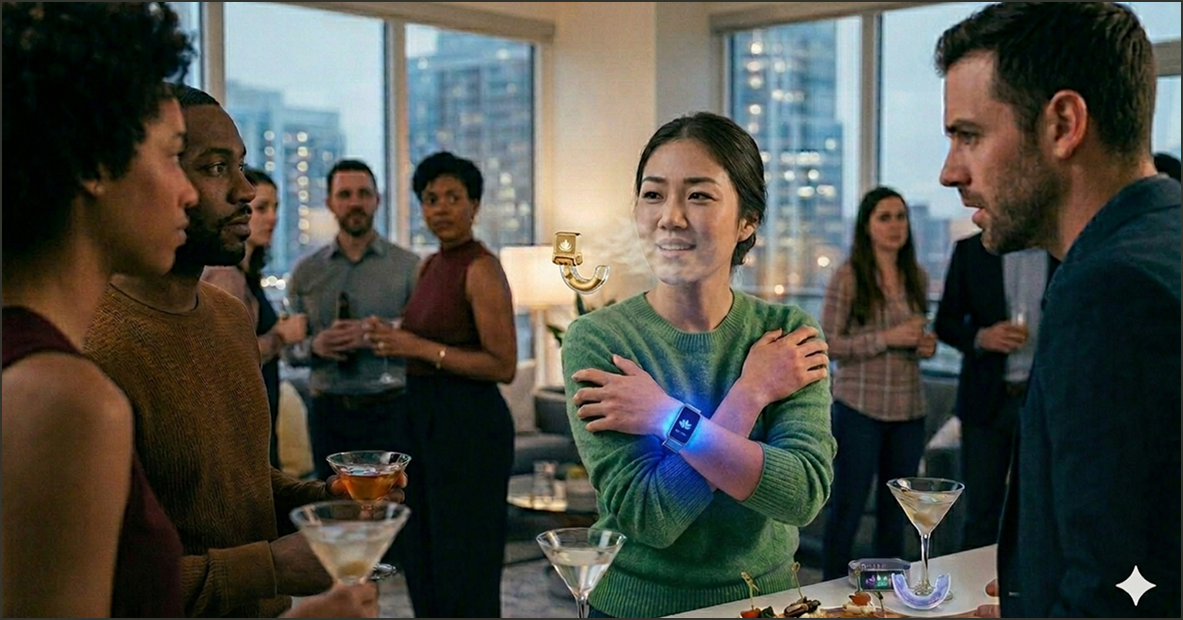
When Clare's heartbeat rises, the bracelet detects her stress and fear. TasteBud activates: positive reinforcement delivered at the moment of courage, not after.
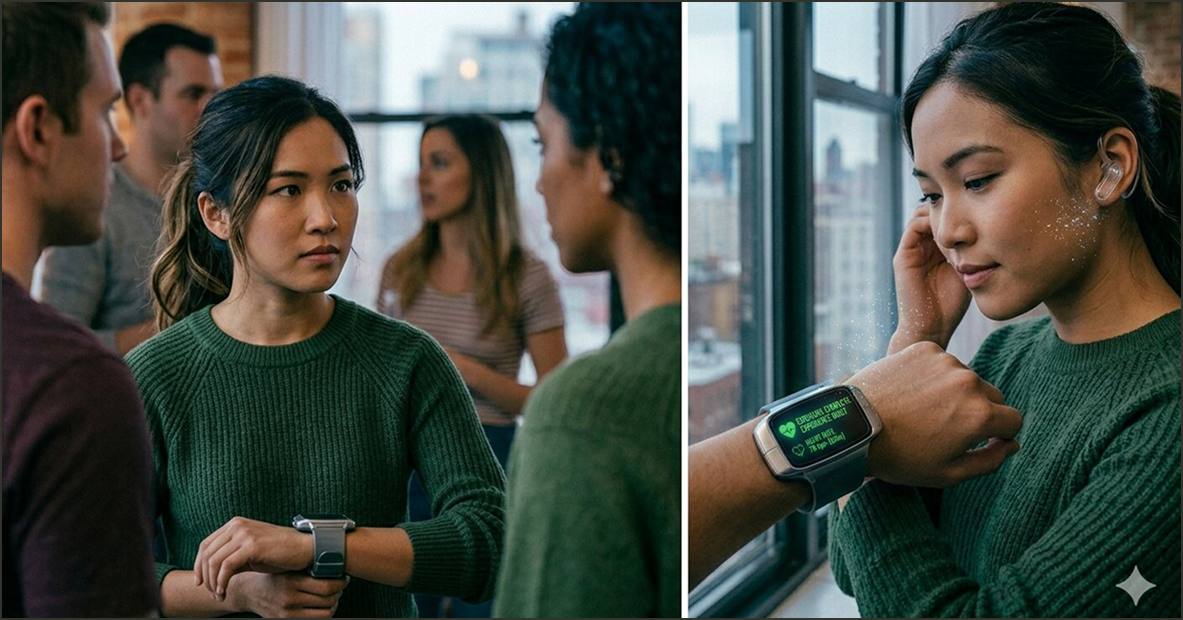
Clare makes progress — but still has a long journey. She keeps showing up to confront her fears. She needs more exposure experience to rid the fear for good. The bracelet stays on.
A realistic and grounded character. I want the viewer to feel as if they empathize with Clare's emotions throughout — and leave asking whether their own comfort zone has a cost.
Evaluate
It was very interesting to work with Claude as a thinking partner. It led me to new discoveries and actually challenged me to take new routes. Using AI as a thinking partner helps tremendously — real people wouldn't usually be as upfront about rejecting certain approaches and ideas. Claude pushed me to question my question, not just my answer.
Working with AI taught me that AI is not only good for generation, but can be a tremendous tool in ideation. Our ideas and our minds can be enhanced with AI, not replaced by it.
Before
I thought AI was as complex as a sentient digital being that humans created. I was afraid of it — a lot of media depicts AI as something that tries to take over humanity. When it actually became a reality, I was still hesitant, but I realized I was more influenced by fictional depictions than by how it actually works.
Now
I feel confident that I can use AI as a tool in my design work and that my ideas are still valuable. AI did not replace my thinking — it sharpened it. The constraints I wrote forced it to stay useful and stay in its lane.
Gallery
Every image here is a decision point. Not polished. Real.

Internal/External — the beginning of the journey.

Mind Map — researching and finding sources.
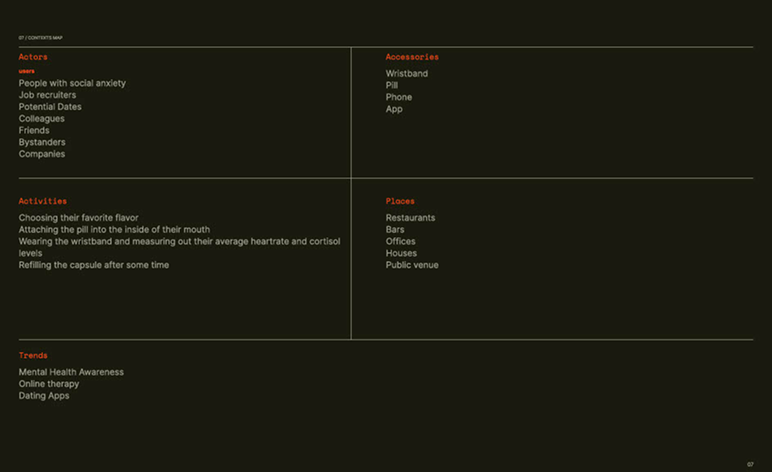
Research Synthesis — finding the target audience.

Loop Testing — step-by-step analysis of how TasteBud works.
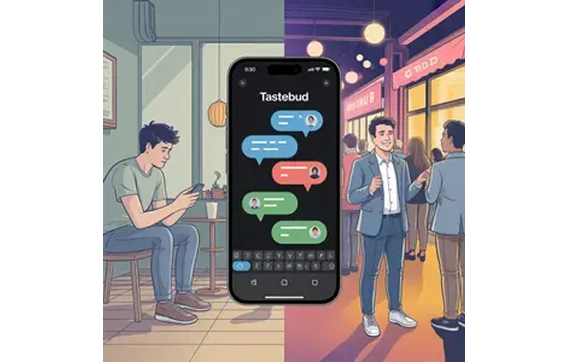
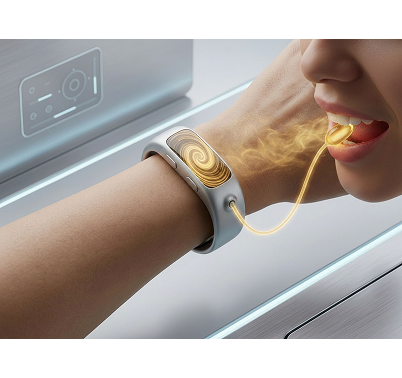
Material and Form — physical representation of the bracelet.
Testing the Seed — first time seeing how the world looks.
Video — finalization of the world, person, and moment.
Stranger avoidance patterns — what the research actually says.
Synthesis — the systemic problem behind the personal one.