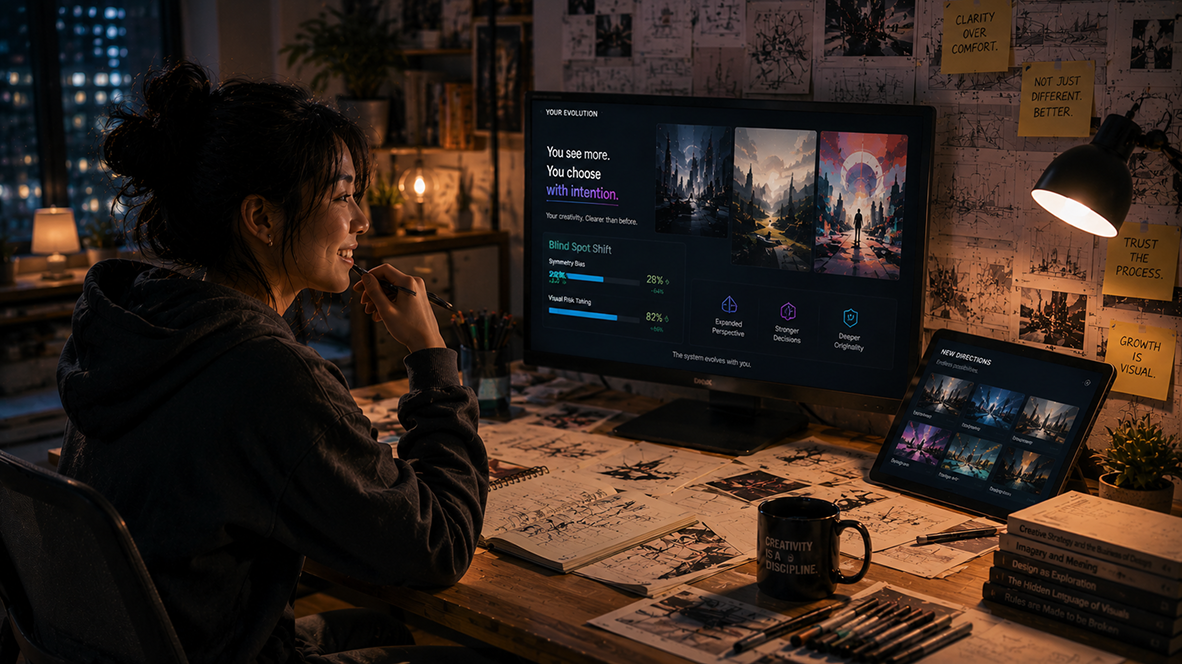
An AI-supported design workspace that helps designers identify creative blind spots and build stronger creative judgment — not by replacing creative decisions, but by making invisible patterns visible over time.
Gather
Six levers defined how Claude would behave throughout the project — not as a solution generator, but as a critical design mentor who asks questions before offering answers.
Act as a critical design mentor who has experience with both traditional design processes and emerging AI tools in creative fields.
Help identify when my design concepts are superficial or underdeveloped. Push for meaningful intervention, not surface-level aesthetics.
Push on conceptual clarity, but let me make my own visual decisions. Intervene when I'm rationalizing instead of reasoning.
Questions before solutions — always. When I present a direction, first ask what problem it's actually solving before evaluating the design itself.
Never tell me which design direction is better. Never prioritize aesthetics over conceptual integrity.
I am a design student struggling with creative judgment when working alongside AI tools. The specific moment: late at night, surrounded by AI-generated outputs, unable to explain why I prefer one over another.
First prompt — the logline
"Can you help me sharpen this project idea? I want to design a system that analyzes a designer's creative process and questions what remains human when creativity becomes predictable."
Claude pushed on the mechanism
"That's an interesting tension you're naming — but 'analyzes the creative process' is doing a lot of work in this sentence. What exactly would the system analyze? The outputs? The choices between options? The time spent on decisions? Each one leads to a very different system. And what does 'remains human' mean to you here — is it about authorship, about taste, about the feeling of making? Before I can help you sharpen this, I need to know: what's the actual moment of breakdown you're designing for?"
What it changed
That question broke the logline open. I had a concept but not a mechanism. The phrase "moment of breakdown" sent me toward Blind Spot — not a system that analyzes a designer's output, but one that surfaces the patterns in their choices over time.
A design student who relies heavily on AI-generated directions but is increasingly uncertain whether their preferences reflect genuine creative judgment or repeated habits they've never examined.
Mia is at her desk late at night, surrounded by AI-generated compositions. She can't explain why she keeps choosing warm tones and centered layouts. She doesn't know if it's taste or default.
I am personally experiencing the moment where my creative role feels like it might be replaced by AI. I want to explore what a co-design system looks like — one that makes human designers stronger rather than obsolete, by helping them understand their own thinking patterns before they lose track of them entirely.
Explore
Three sources grounded the project in real precedent — design systems thinking, class critique as feedback loop, and AI-assisted design tool research. Together they shaped the four directions that were mapped and narrowed.
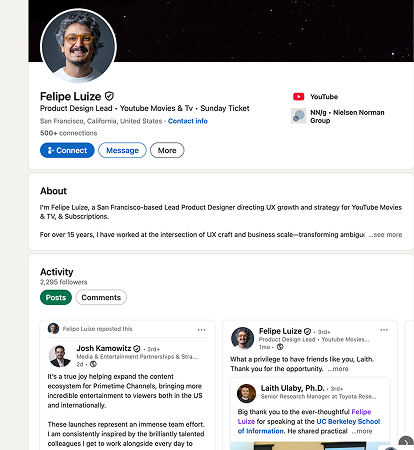
Design Practice
Felipe Luize's work on design systems
How systematic constraints can actually expand creative range — the designer is most free when they understand the rules they're working within.
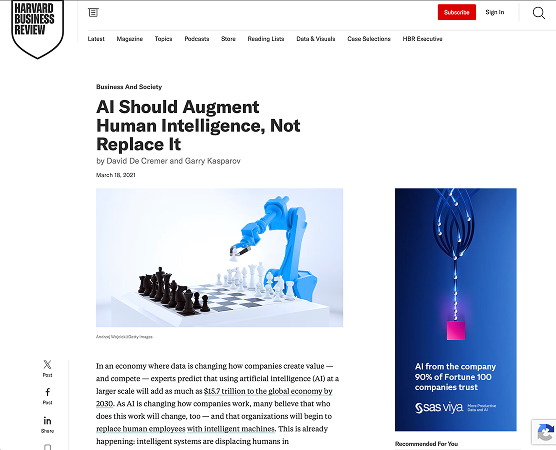
Studio Practice
Class critiques as a feedback mechanism
The class critique as a model for externalized reflection — what you can't see in your own work becomes visible when it's named by someone outside it.
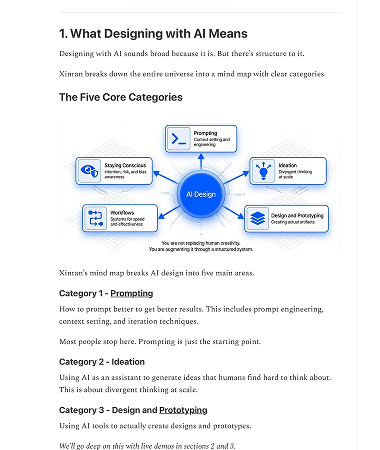
Technology
AI-assisted design tools research
Current tools accelerate generation but rarely interrogate the designer's decision-making. The feedback loop stops at output, not judgment.
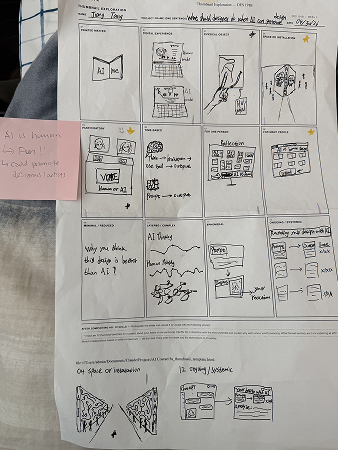
The research synthesis produced four distinct design territory maps: AI learns humans, humans learn AI, co-evolution, and AI reveals blind spots. The fourth quadrant pointed to the most underexplored opportunity — a tool that makes the designer's invisible habits legible to themselves.
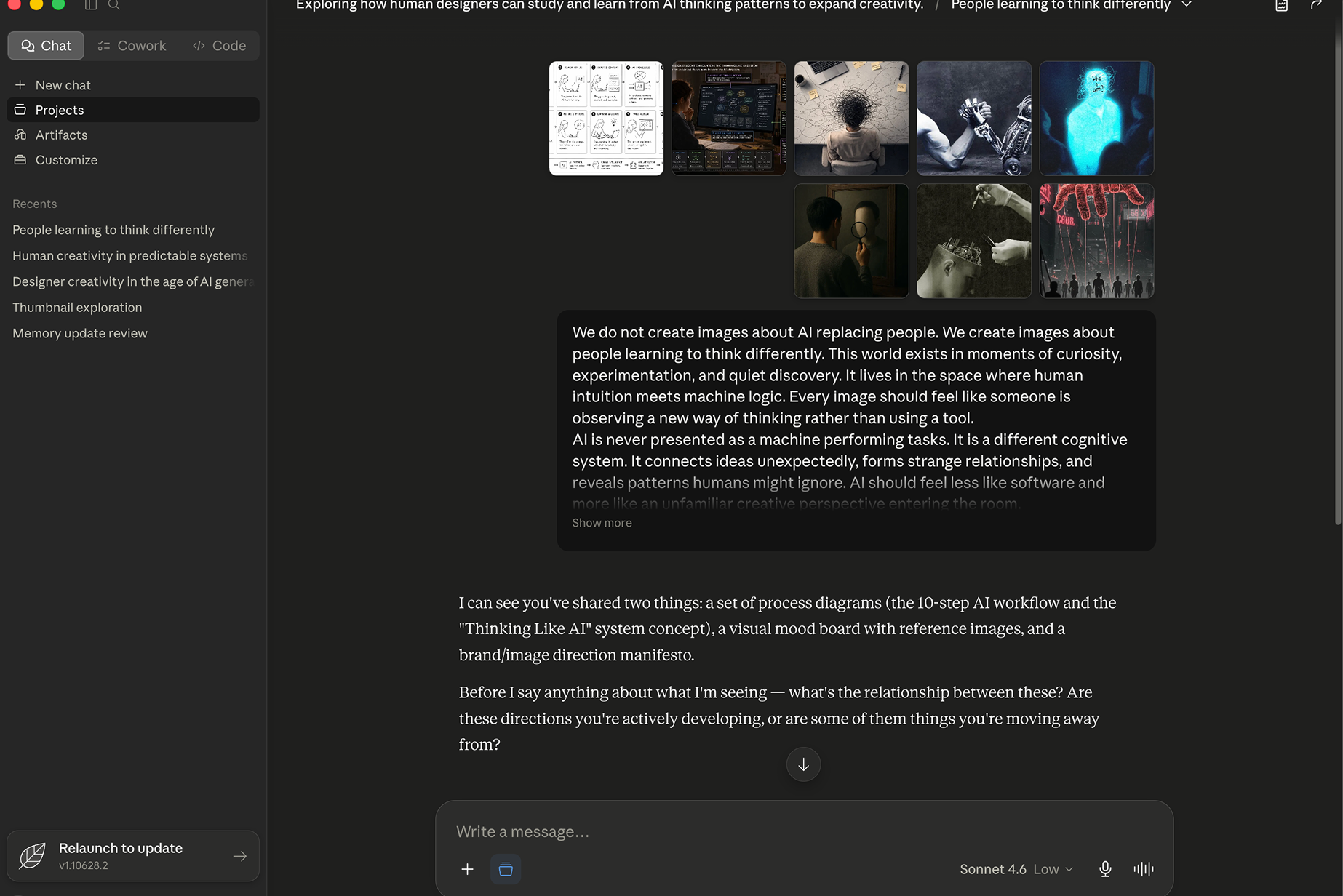
After presenting 4 directions
"I mapped four territories. The one that keeps drawing me back is 'AI reveals blind spots' — the idea that the system tracks what you choose over time and makes patterns visible you didn't know you had."
Claude
"That's the most specific of the four. But I want to push on it: reveals blind spots to whom — to the designer in the moment, or retrospectively? Because those are opposite interventions. And what counts as a 'blind spot' versus a signature style? A designer who always uses warm tones might be developing taste. Blind Spot only matters if the pattern is invisible AND limiting. How do you know the difference?"
What it opened
That tension between signature and blind spot became the conceptual spine of the whole project. Not whether the patterns are good or bad — but whether Mia can see them at all.
Narrow
The midterm was a turning point — critique pushed the concept from broad anxiety about AI replacement toward a specific, actionable intervention around creative judgment.
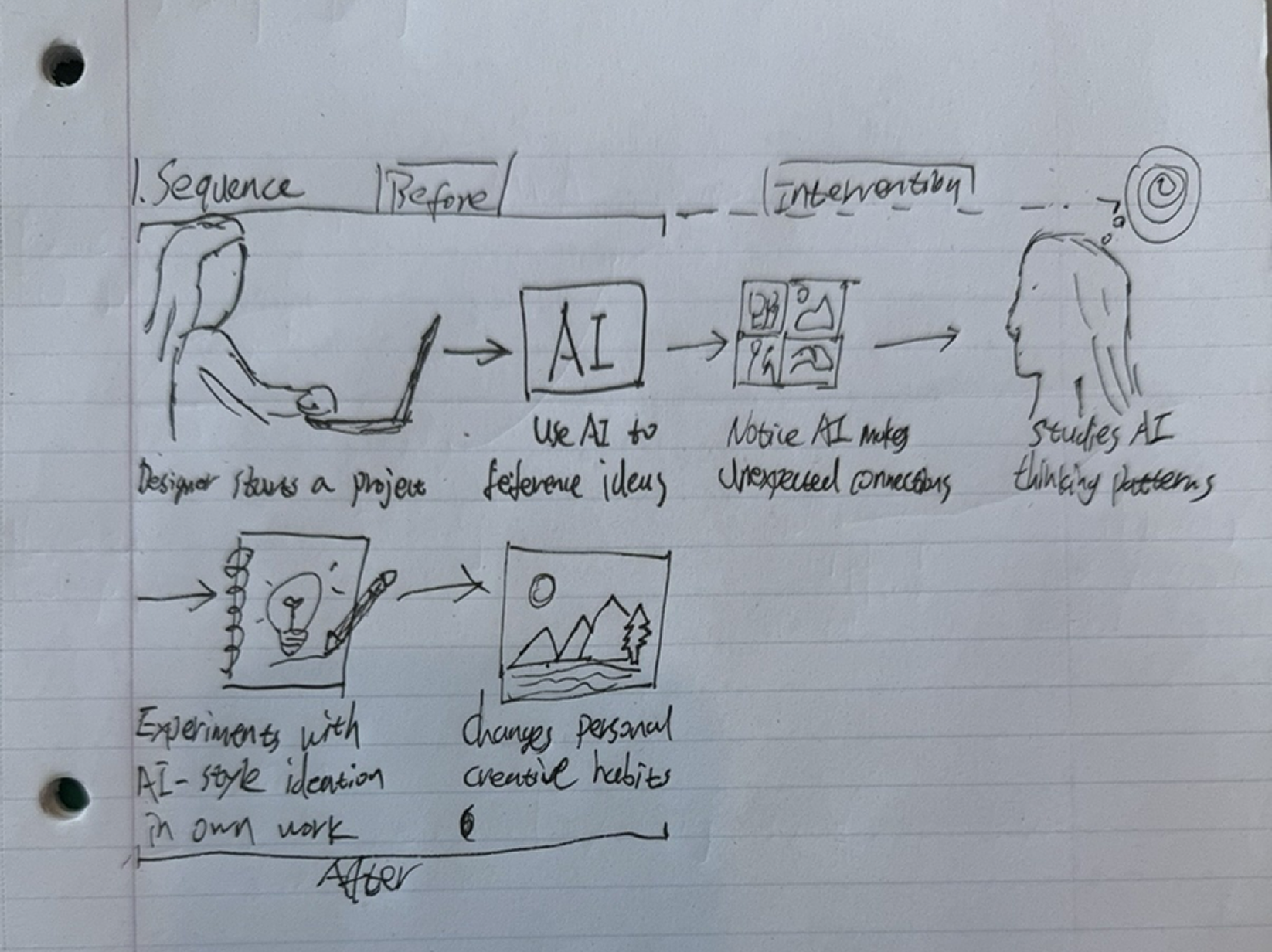
There is an opportunity to help design students who rely heavily on AI tools gain genuine creative self-awareness by making their invisible decision-making patterns visible — not to judge those patterns, but to put the designer back in a conscious relationship with their own preferences.
How might we help designers recognize and challenge their creative blind spots while working with AI?
How might we provide designers with AI feedback specifically targeting repetitive habits in their output — not critique but pattern recognition?
How might we design an AI that acts as a creative trainer, building creative judgment over time through challenge and reflection rather than generation?
I want to explore what it looks like when AI helps human designers understand their own creative thinking — not by generating for them, but by reflecting their patterns back to them in ways they couldn't see alone. Over the next five weeks, I want to design a system that makes creative judgment visible and buildable, starting with the specific moment when Mia is surrounded by AI outputs and can't explain her own preferences.
Implement
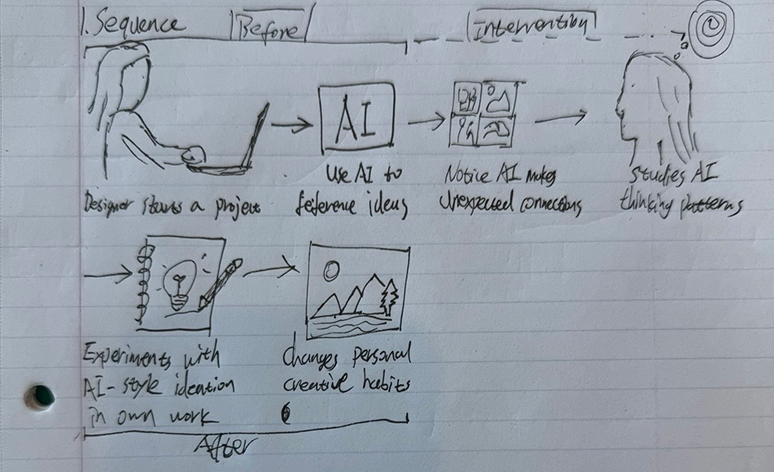
The first making phase. Before the visual seed, before the video — generating to understand what this world looks and feels like.
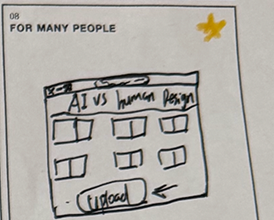
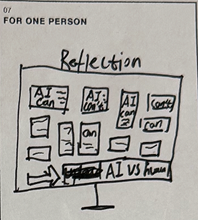
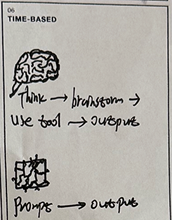
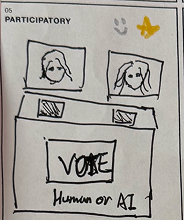
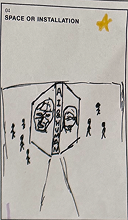
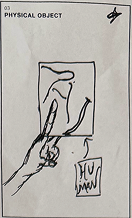
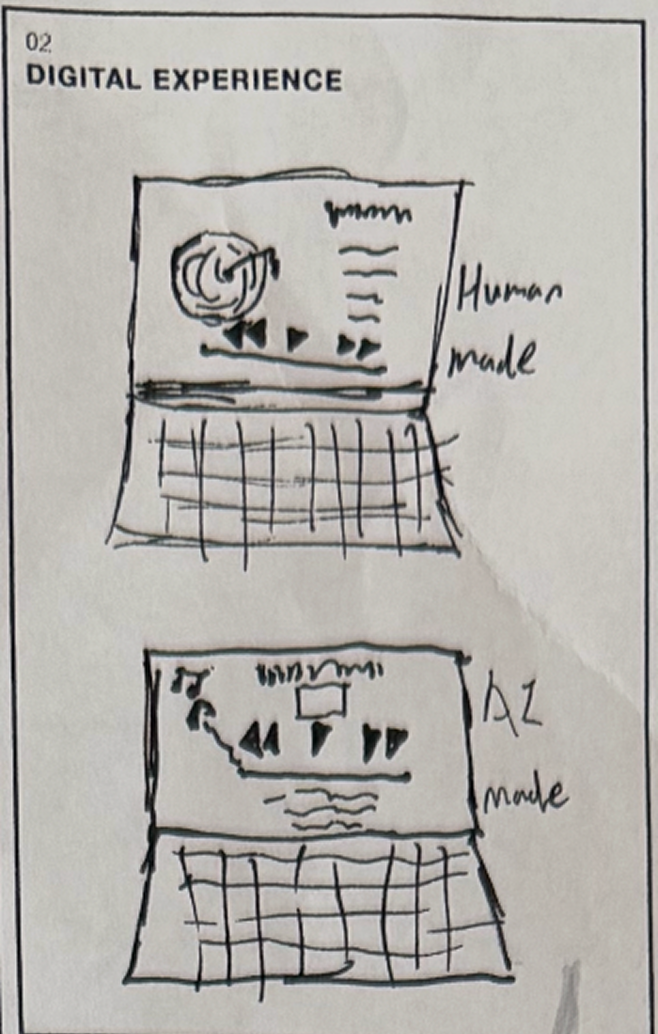
The before and after state — the gap Blind Spot is designed to close.
Before
Mia sits at her desk late at night. She's opened 30 AI-generated compositions in a row. She's chosen 6. She cannot explain why. She doesn't know if she has taste or just habits.
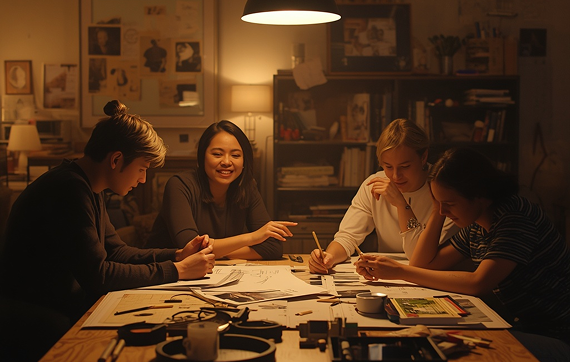
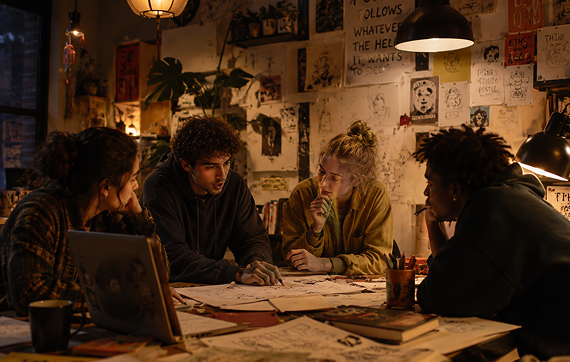

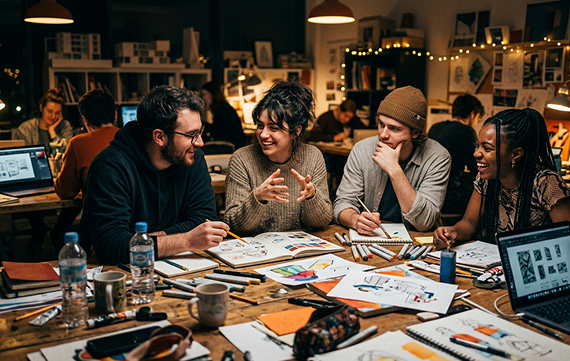
After
Blind Spot maps Mia's creative history. She sees the patterns across her decisions — always warm, always centered, always symmetrical. Now she can decide whether to continue or challenge. The invisible is made visible.
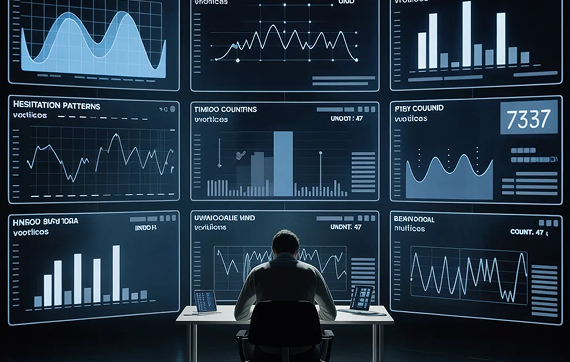
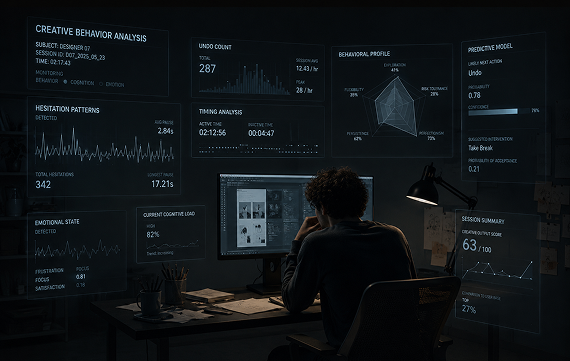
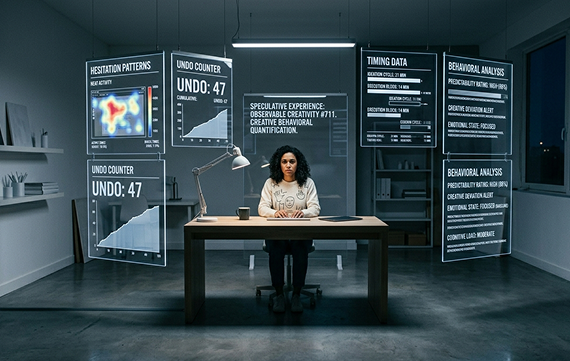
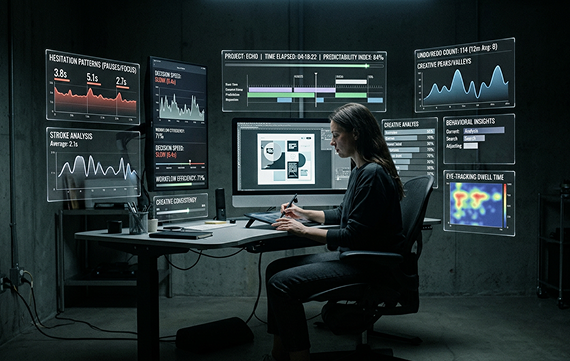
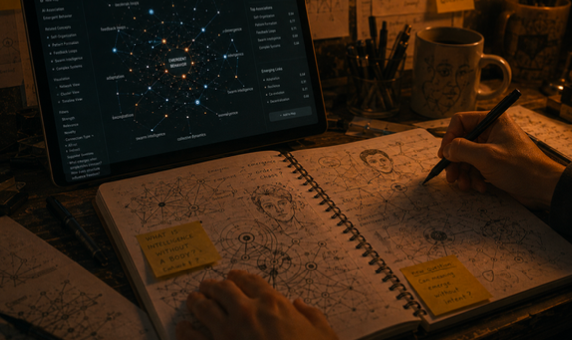
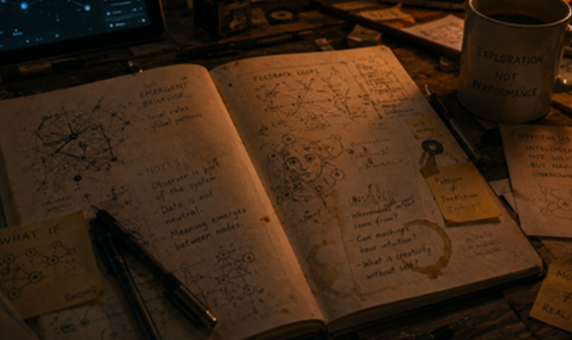
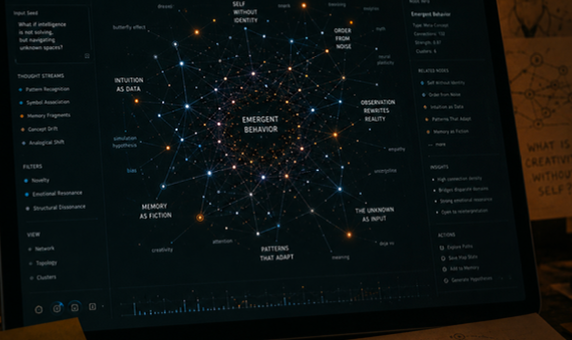
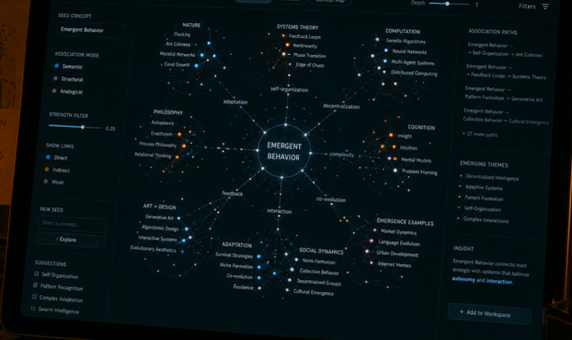
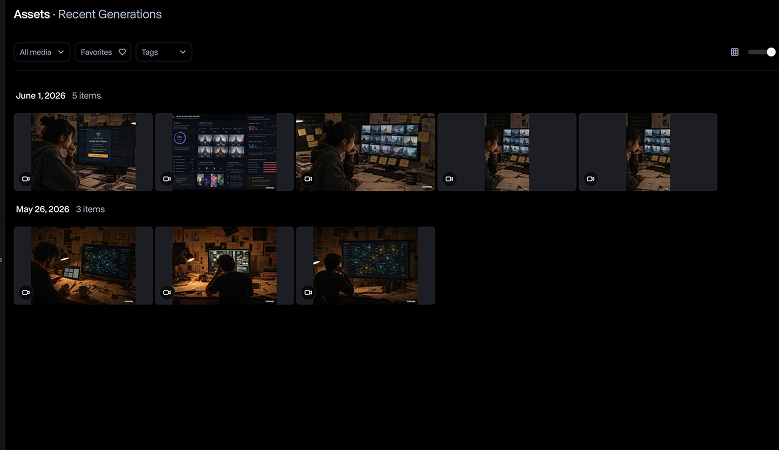
Three frames for the project — quiet, reflective, late-night. The world that Mia inhabits.
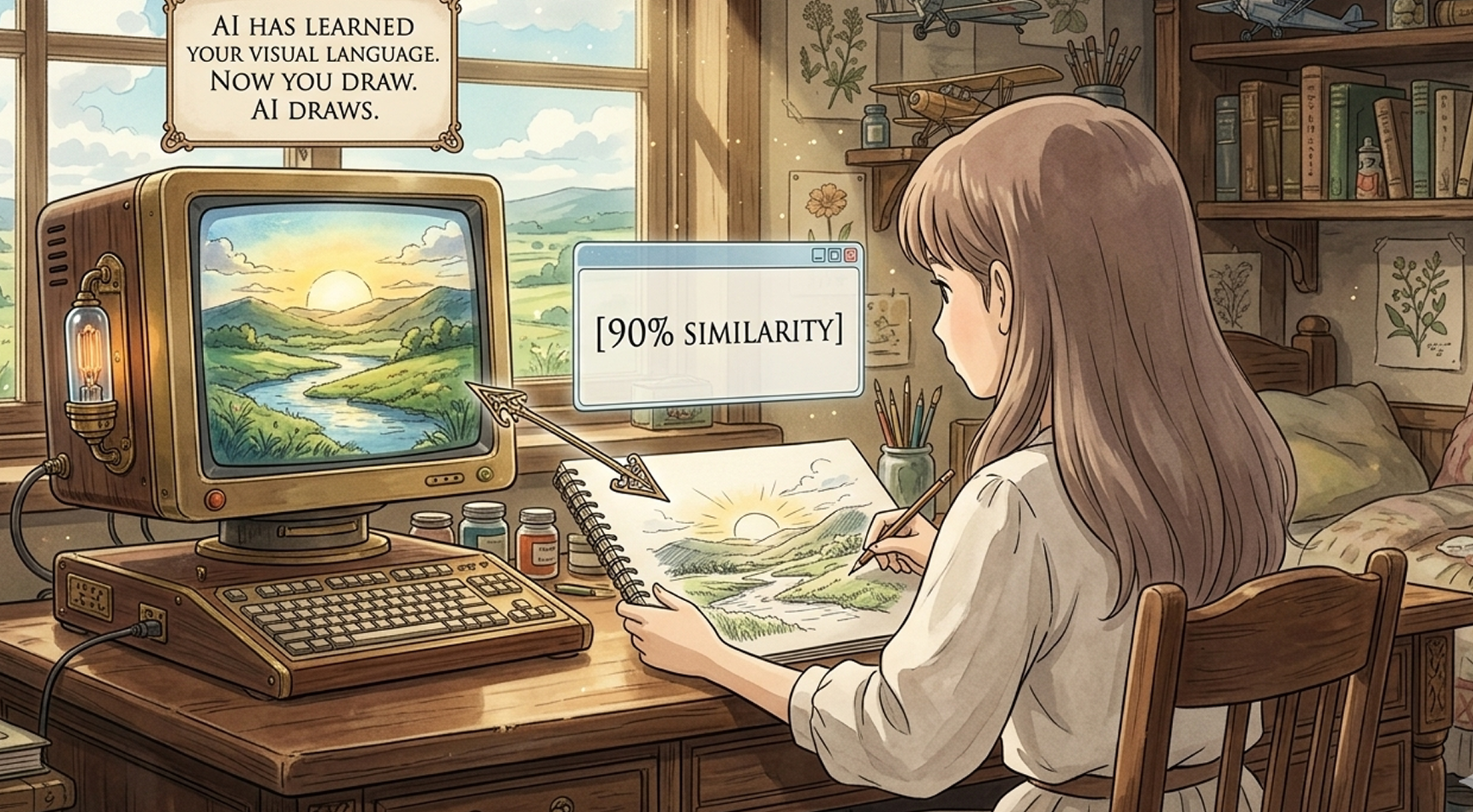
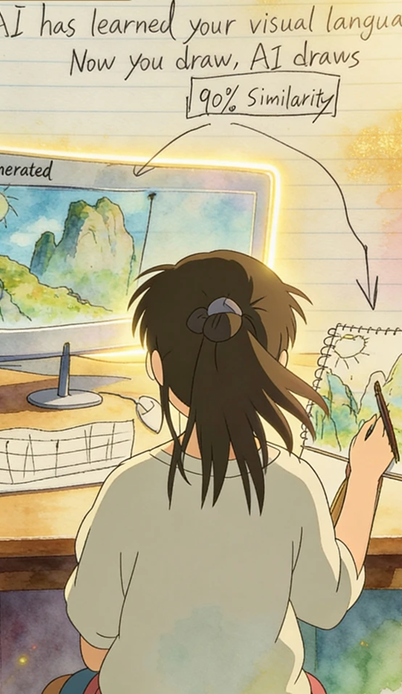
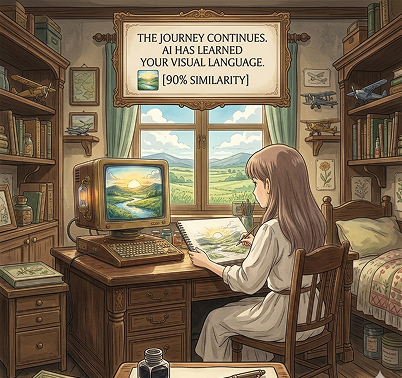
Blind Spot is not a critique tool. It is a mirror — a system that tracks repeated creative decisions over time and makes invisible patterns visible to the designer who made them.
When Mia is stuck between multiple AI-generated directions and can't explain her preferences, Blind Spot reveals the hidden creative habits she's built over time. The system tracks her decisions across projects — visual weight, color temperature, compositional tendencies — and maps them back to her as a pattern portrait. Not to judge those patterns, but to put Mia in a conscious relationship with her own creative identity.
Because: Blind Spot tracks repeated creative decisions over time and makes invisible patterns visible — giving designers the self-knowledge they need to make genuinely intentional choices when working alongside AI.
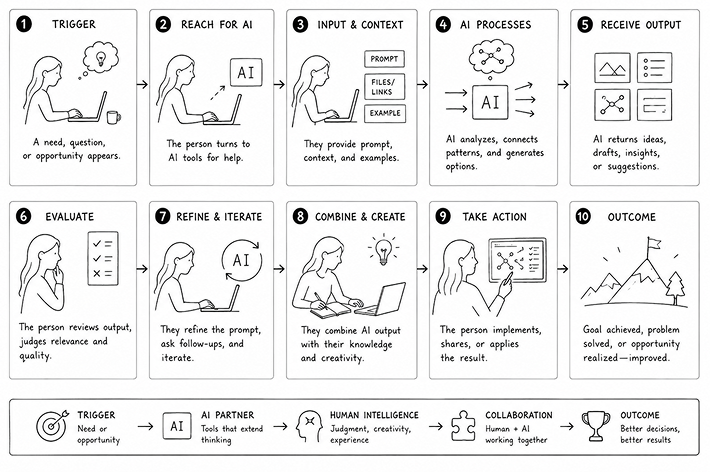
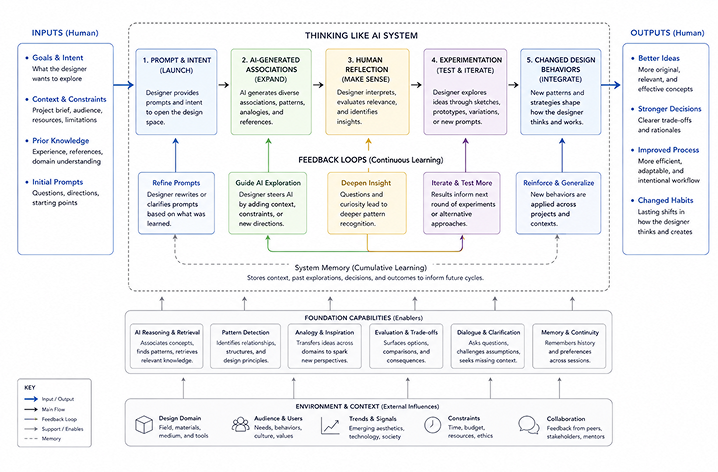
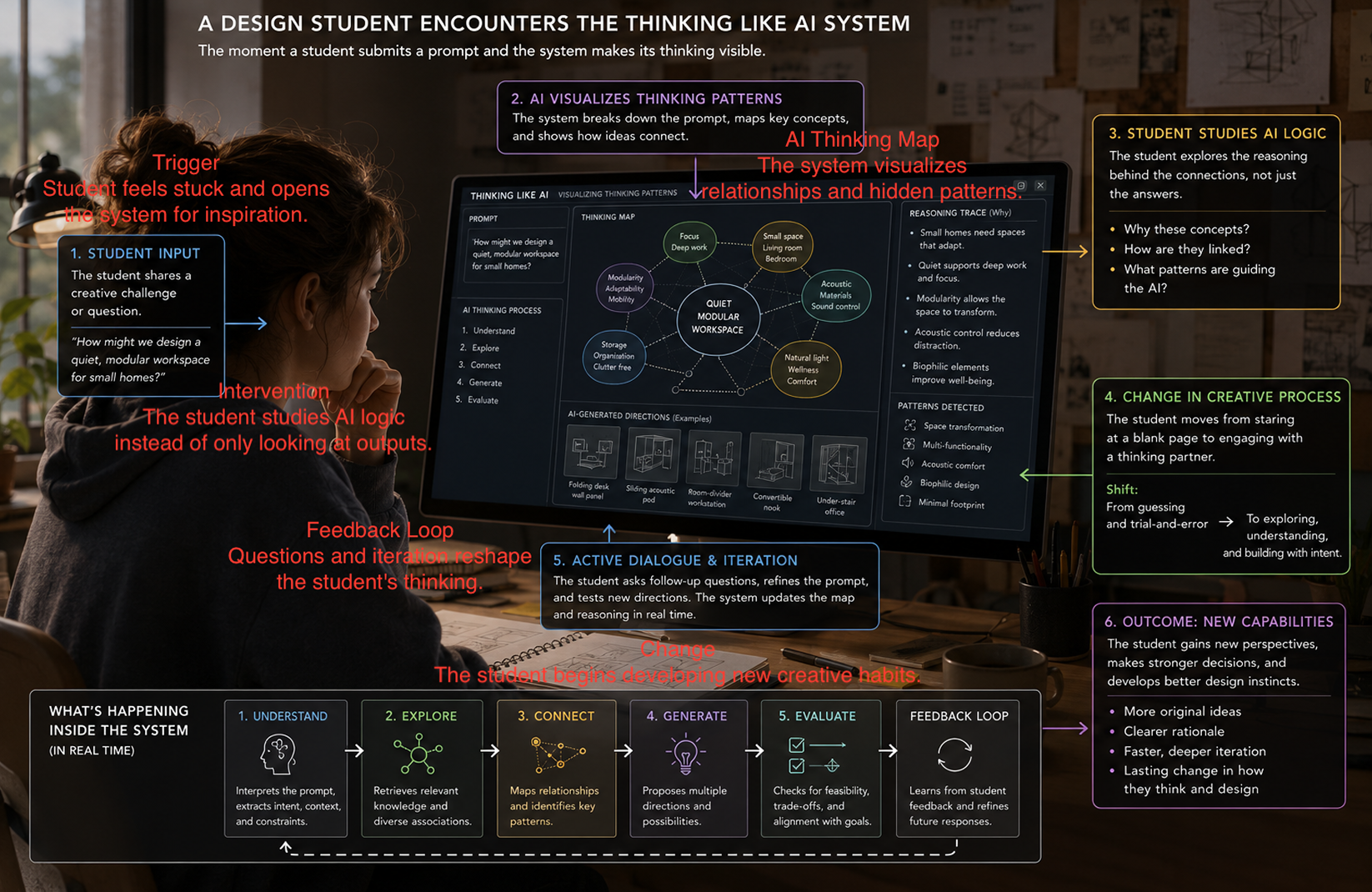
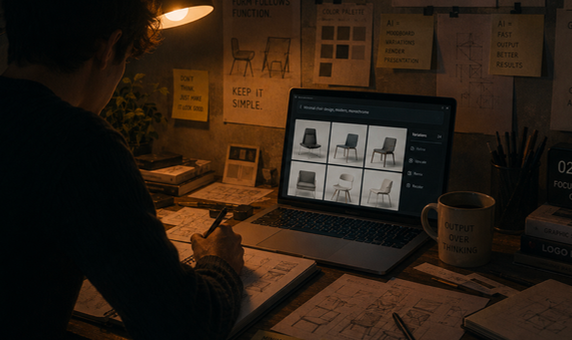
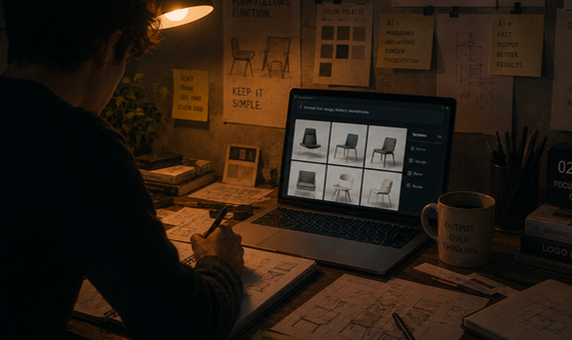
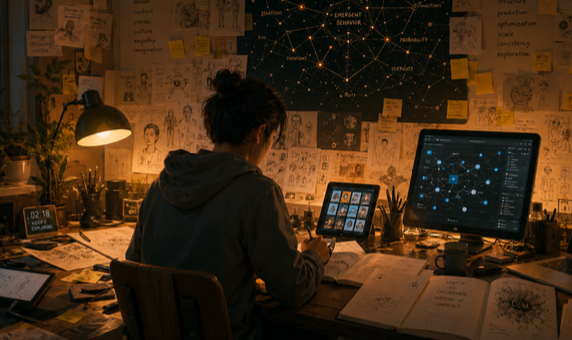
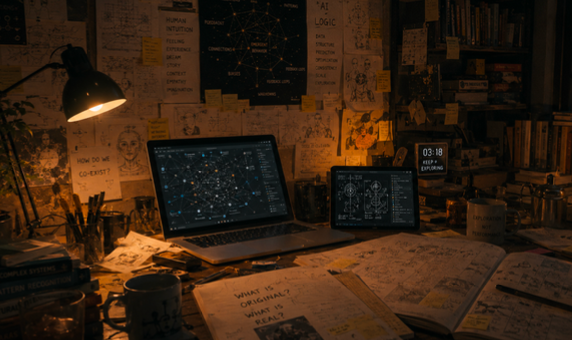
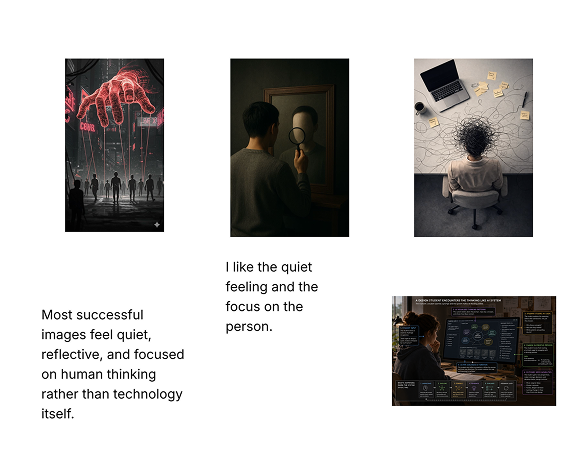
The visual world every image had to belong to — quiet, reflective, late-night experimentation. Not a futuristic lab. A real design student's real desk at 1am.
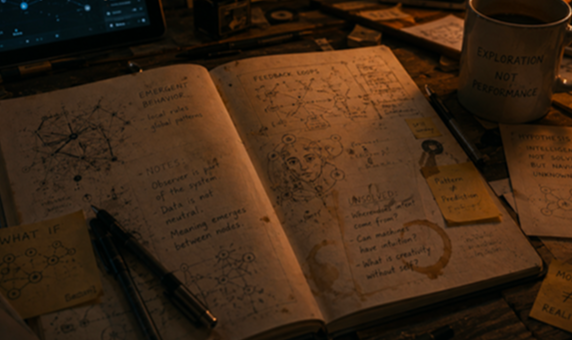
Strongest image from moodboard
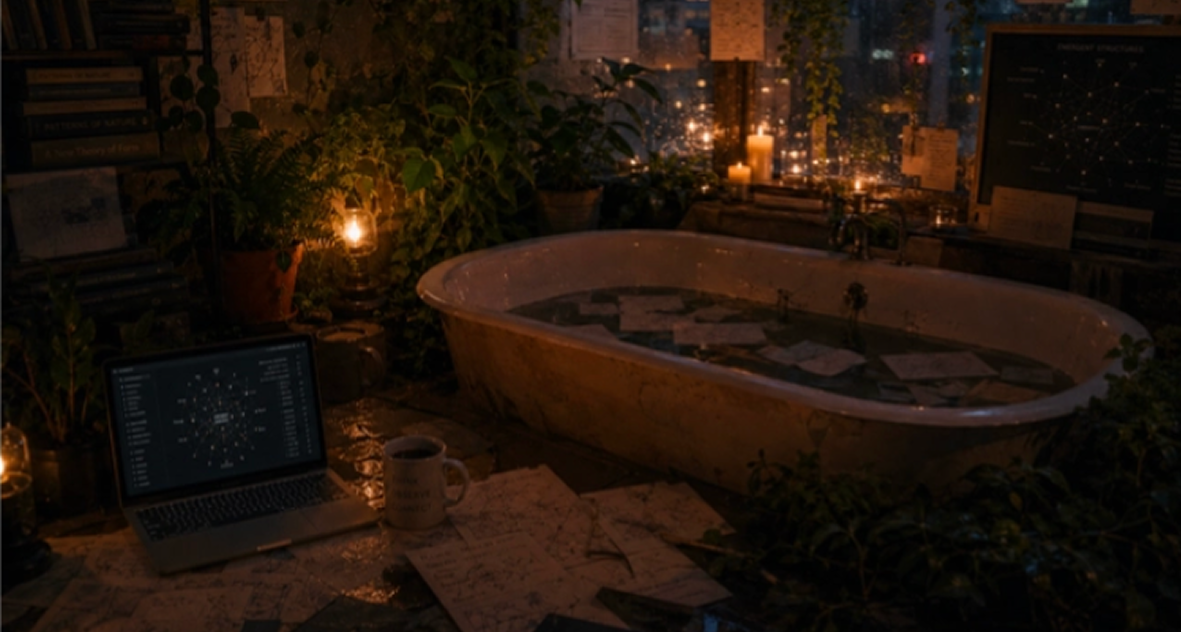
Strongest image from moodboard
This world is quiet and reflective, not technological or futuristic. The light is warm and dim, like late-night work sessions where the screen is the only light source. Mia's workspace is cluttered with evidence of thinking — sketches, printed compositions, a tablet stylus resting mid-thought. The images feel like documentation of a real process, not product photography. Every interface element is subordinate to the human doing the work. AI is present but not visible — it exists as a different way of thinking, not as a separate entity. The tension in every image is between the abundance of generated options and the silence of genuine preference. Nothing in this world is polished. Everything is in process.
Visual Register — This or That:
12 shots across the world, the intervention, the story, and the unexpected.
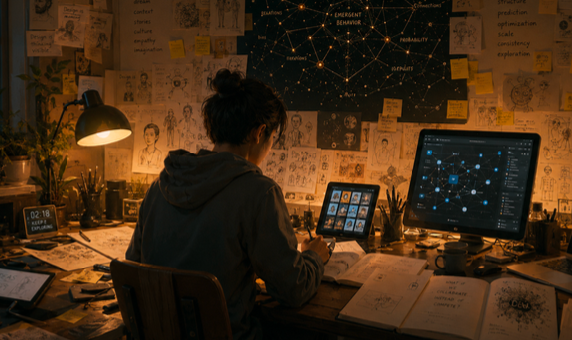
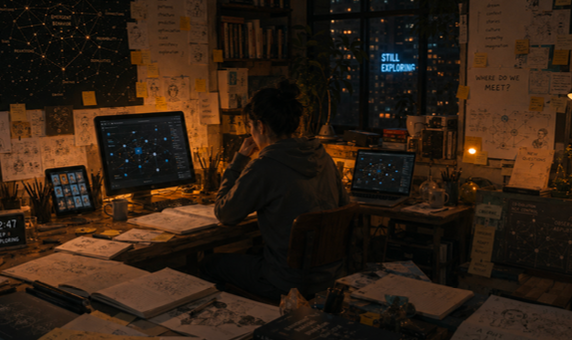
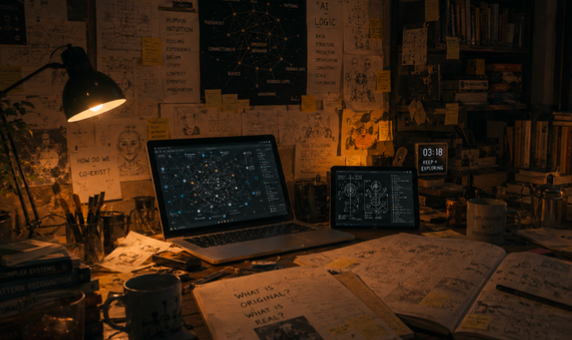
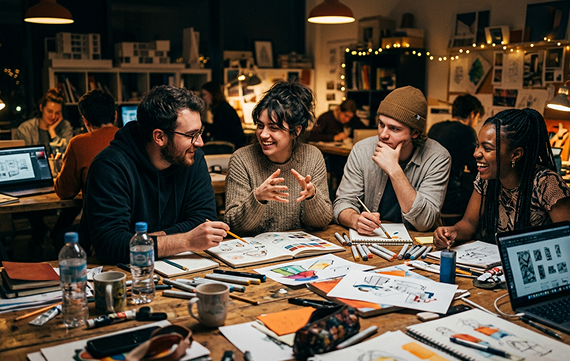
Storytelling
A reflective, thoughtful narrative — not a product demo or a futuristic vision. Mia's real experience, told through four beats of recognition and change.
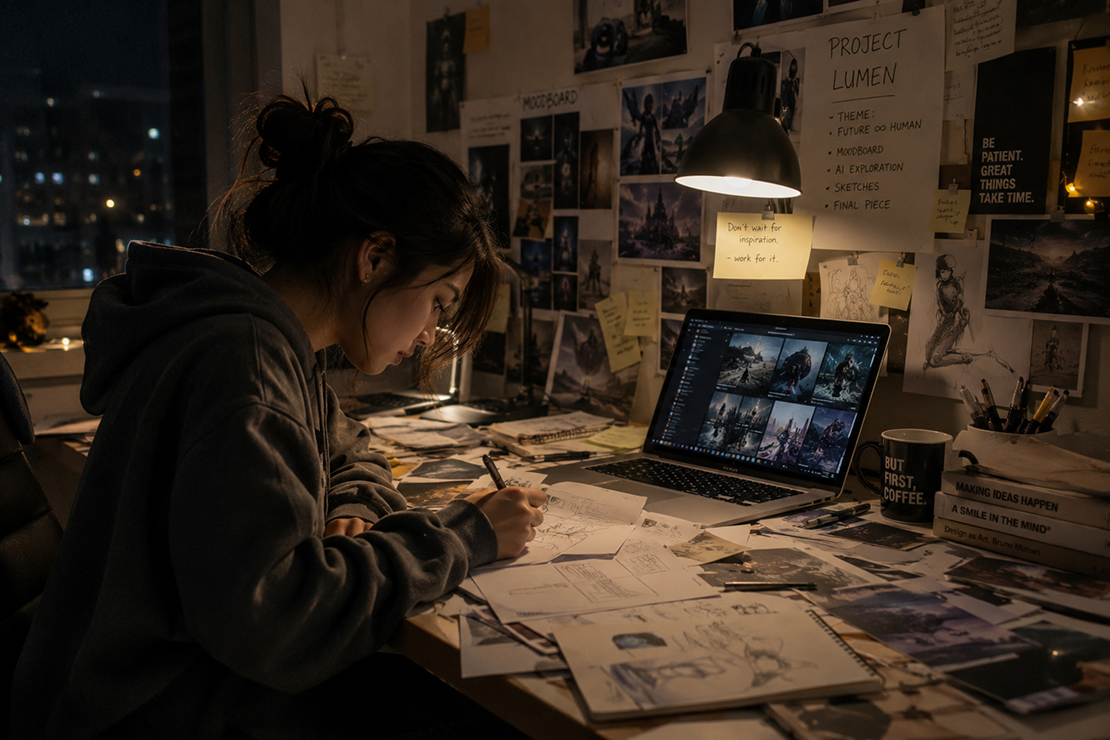
Mia uses AI tools constantly in her design process, generating hundreds of options quickly — but she realizes she can't explain why she makes the choices she does. Something feels off but she can't name it.
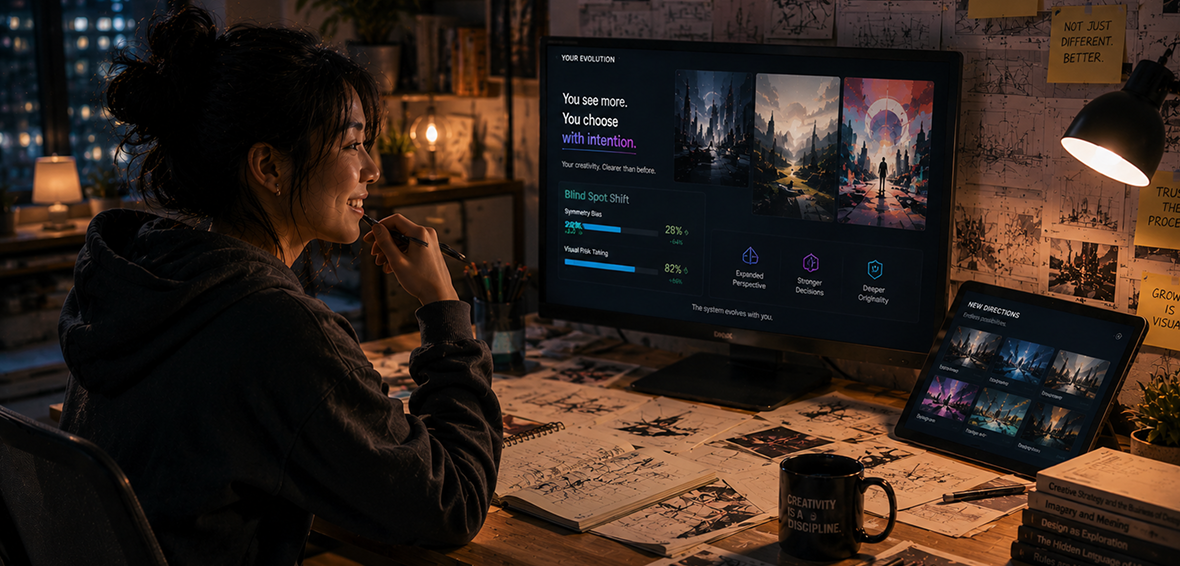
A pattern recognition moment: reviewing past work, she realizes she has been making the same compositional choices for months without being aware of it. Same warm tones, same centered layouts, same visual weight.
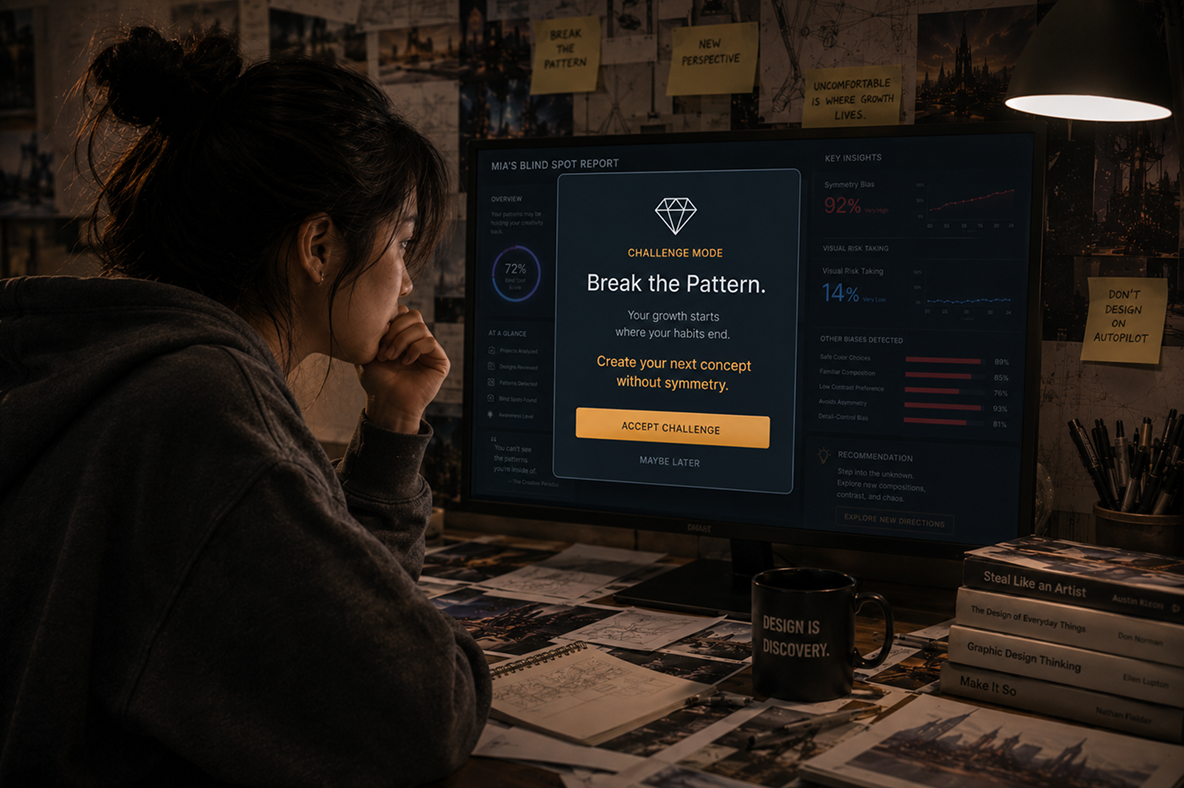
Blind Spot maps her creative history — surfacing the invisible habits she built without noticing. Not as a judgment, but as a mirror. The challenge: now that you can see it, what do you do with it?
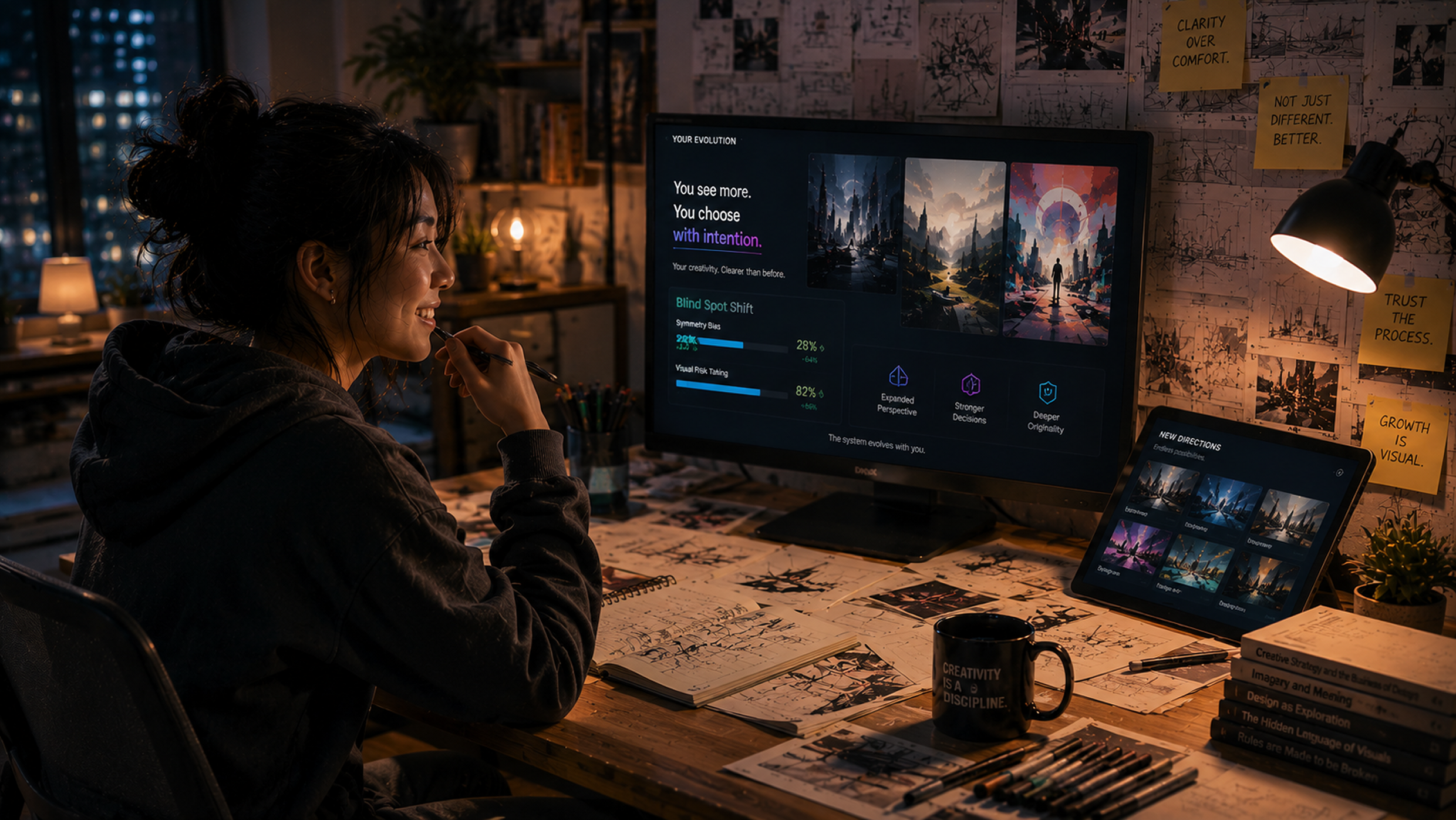
The challenge doesn't resolve. Mia now has creative self-awareness she didn't have before — the ability to choose her patterns consciously, rather than fall into them by default. The work continues.
Reflective and thoughtful — not futuristic or technological. The story of a designer finding her way back to genuine creative judgment by learning to see what was always there.
Evaluate
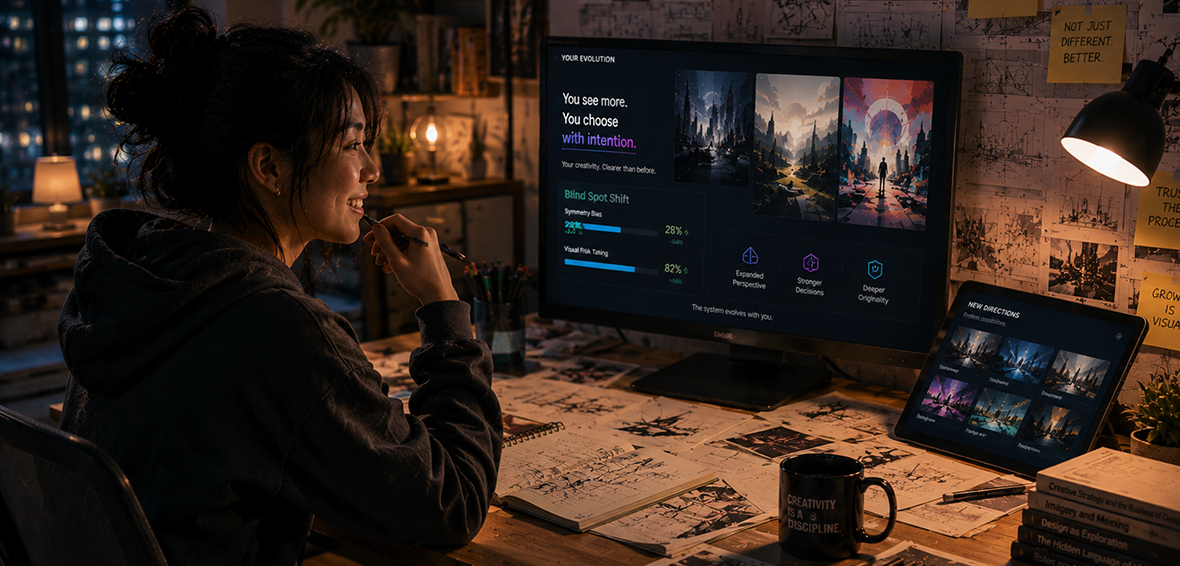
Blind Spot is not a critique tool. It is a mirror — a system that tracks repeated creative decisions over time and makes invisible patterns visible to the designer who made them. Not to judge those patterns, but to put the designer back in a conscious relationship with their own creative identity.
Because Blind Spot tracks repeated creative decisions over time and makes invisible patterns visible — giving designers the self-knowledge they need to make genuinely intentional choices when working alongside AI.
Before
I was using AI as an image and idea generator — a tool that produces outputs faster than I could make them myself. My design process was: generate, select, repeat. I didn't examine what I was selecting or why.
Now
I now know how to design AI experiences that support reflection and creative growth instead of simply generating more content. The quality of any AI collaboration depends entirely on how well you have framed the problem — not how good the AI is.
Class Gallery
Artifacts from the arc — from the first logline to the final pattern portrait. Each one is a decision point in the making of Blind Spot.
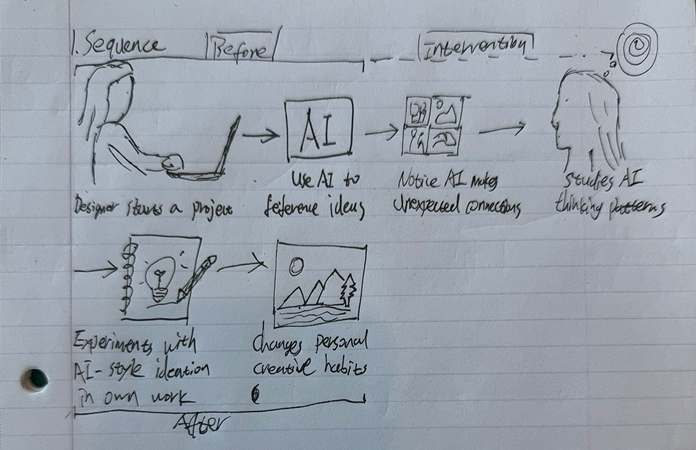
AI Pattern Map Interface — Blind Spot tracking Mia's creative history across projects.
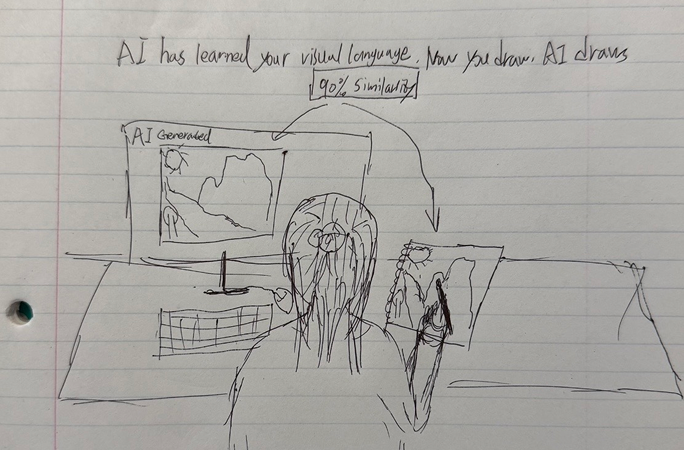
Before Scene — Mia surrounded by AI-generated compositions, no explanation for her choices.

After Scene — patterns visible, creative self-awareness built. The challenge continues.
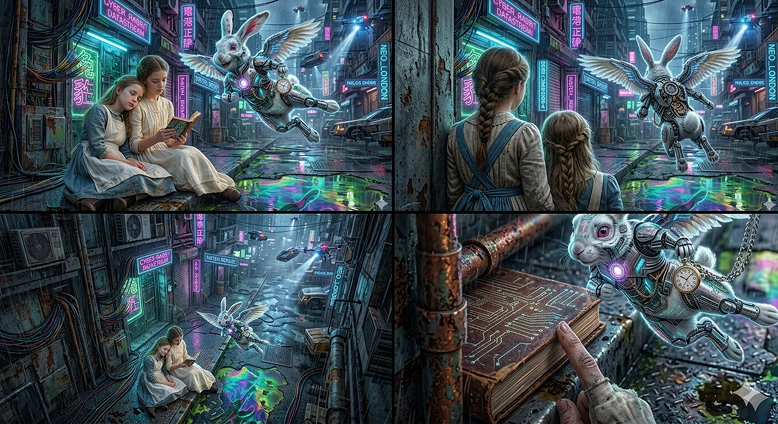
Human Moment — the late-night desk. The real site of the design problem.
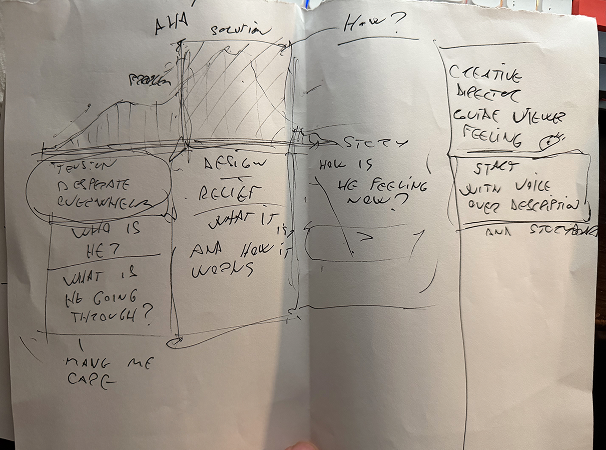
HOW Diagram — pattern capture, decision mapping, and reflection mode together.
Research synthesis — four quadrant map, narrowing from replacement anxiety to creative self-awareness.
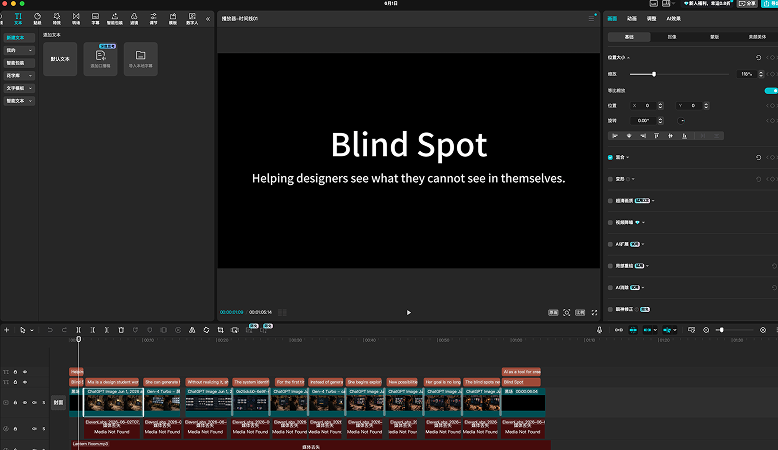
Visual seed development — finding the right register for a world that doesn't feel futuristic.
Pattern portrait iteration — what does it look like when habits become visible to their owner?
The pivot moment — from AI learning human thinking to humans learning through AI.