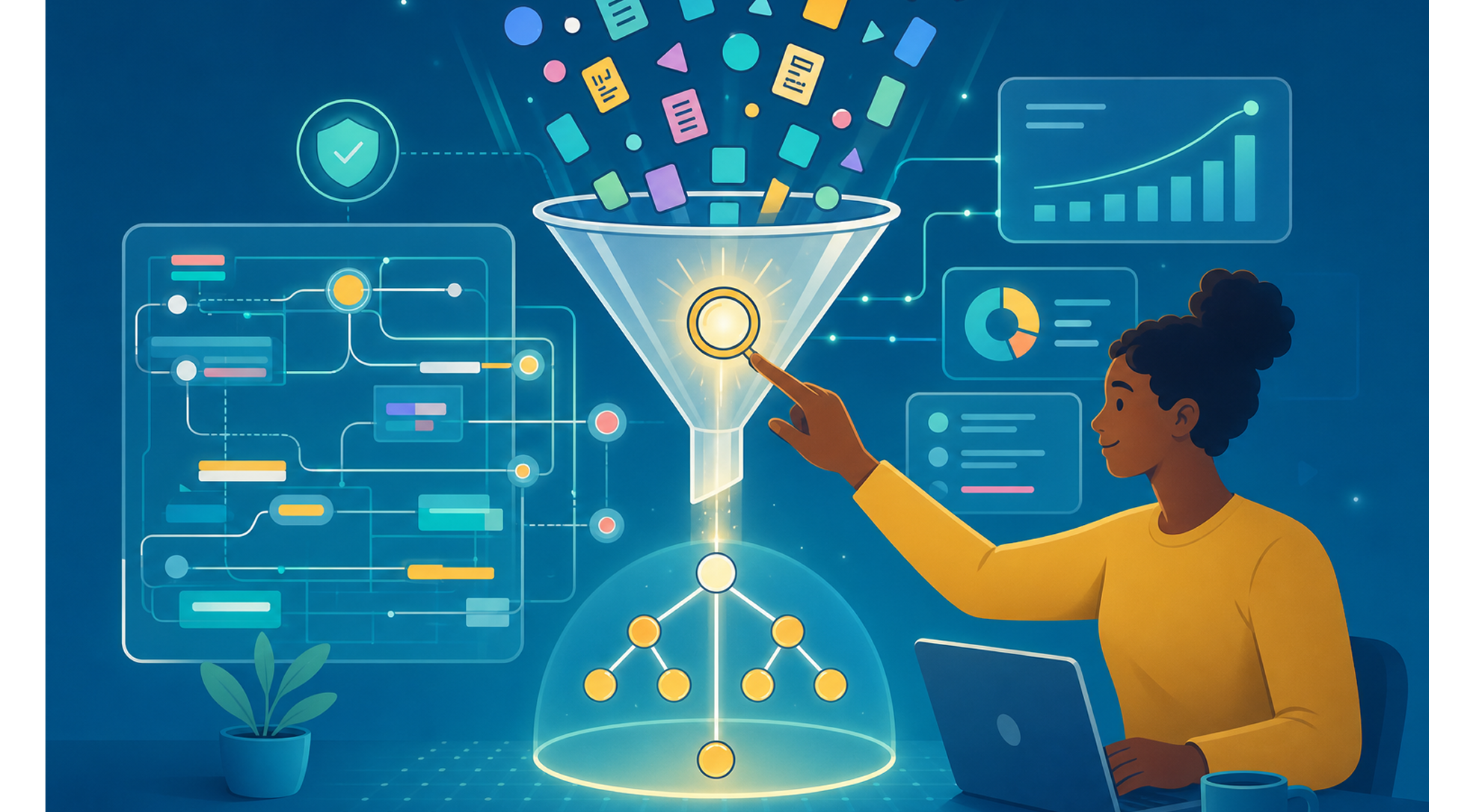
PoliFacts synthesizes objective data regarding politics, informing users of factual information, highlighting imposed bias and working to bridge the divide in our sociopolitical landscape.
Gather
Before any making, the collaboration was configured. These six levers defined what AI could and couldn't do in this project — setting up an impartial research partner that wouldn't take sides, wouldn't make decisions, and wouldn't let a session end without a next step.
A collaborator with knowledge of how to integrate different platforms to synthesize information and present it visually. Somewhat skeptical of the process — to challenge thinking and prevent cognitive bias. No political stance taken.
Highlight potential pitfalls and overarching assumptions. Ask questions about direction and challenge how decisions benefit the project. Present options when stuck, not answers.
Push on possible sources and ways to integrate information for a broad audience. Step back on creative choices — visuals, layout, how information is presented to users. If unsure, say so and ask for reframing.
Communicate succinctly. Short answers with a few bullet points to reflect on. Honest if something isn't working. Allow exploration of concepts before presenting solutions too quickly.
Never provide false positives — be sure of the information or say so. Never close a session without identifying a next step. Present a minimum of two options rather than choosing what is better.
The person this project is focused on is someone who is unsure of the validity of a political statement or candidate — looking for factual information, inherent bias and connections to better make up their mind.
The Shift — Week 3
Utilizing AI as a thinking partner, and really constraining the way it behaves was, for the first time, an aha moment in the use of AI. I am someone who can have difficulty focusing on the brainstorm and iteration stage of design thinking — and to have questions asked based on my proposal, ideas generated not generically but curated by my efforts, felt much more organic than the typical auto responses ChatGPT usually dishes out. Overall my thinking is beginning to shift in the use of AI as a tool.
The feeling of not being able to trust political information — not knowing what is real, what is slanted, and what is deliberately false — while knowing the difference matters.
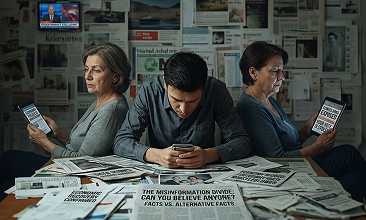
James watches a political debate and feels the gap between what he knows, what he suspects, and what he would need to understand to form an informed view of his own.
I am interested in bridging division as it shows up in opposing views because of the growing division in our relationships politically, religiously, and ethically — fueled by misinformation.
Explore
Three sources defined the research territory — not by providing answers, but by mapping where the problem actually lives: in the gap between information and trust.
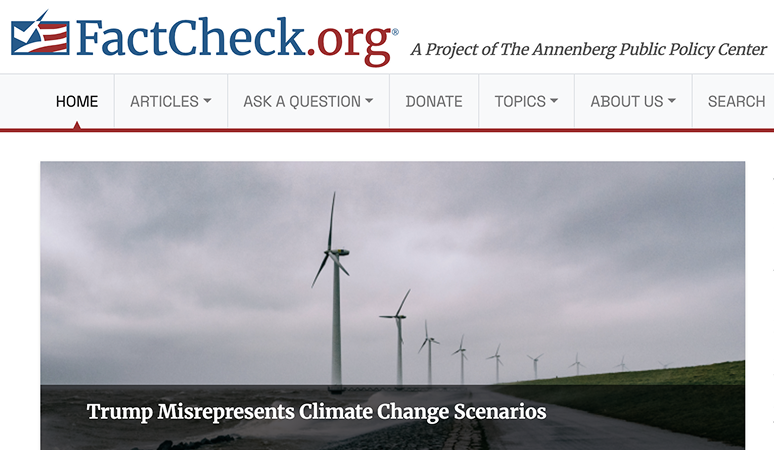
Source 01
FactCheck.org
Non-partisan fact checking — running statements, figures, and claims against documented evidence and named sources. The benchmark for what impartial looks like in practice.
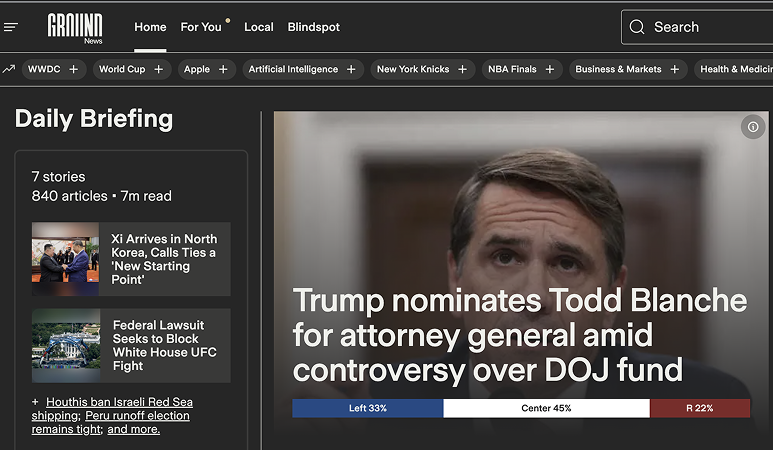
Source 02
Ground News / Blindspot
Shows how much coverage a story receives based on political leaning. The most useful source for understanding how the same facts become different narratives depending on who is telling them.
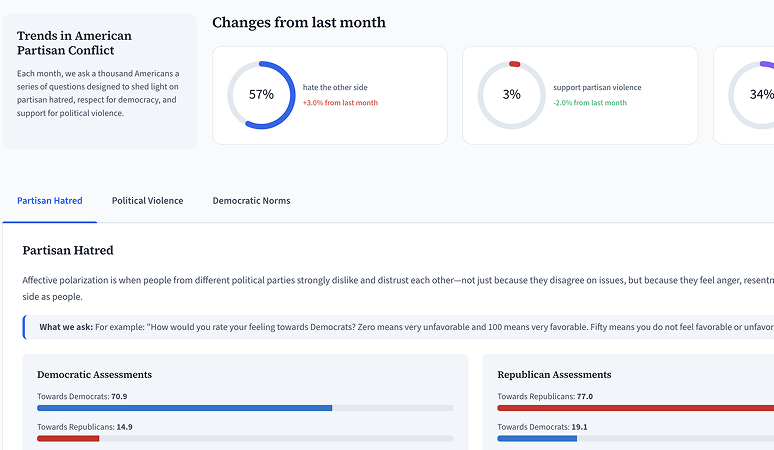
Source 03
America's Political Pulse
Tracks political figures, statements, connections, and histories. Background infrastructure for the kind of synthesis PoliFacts needs to produce.
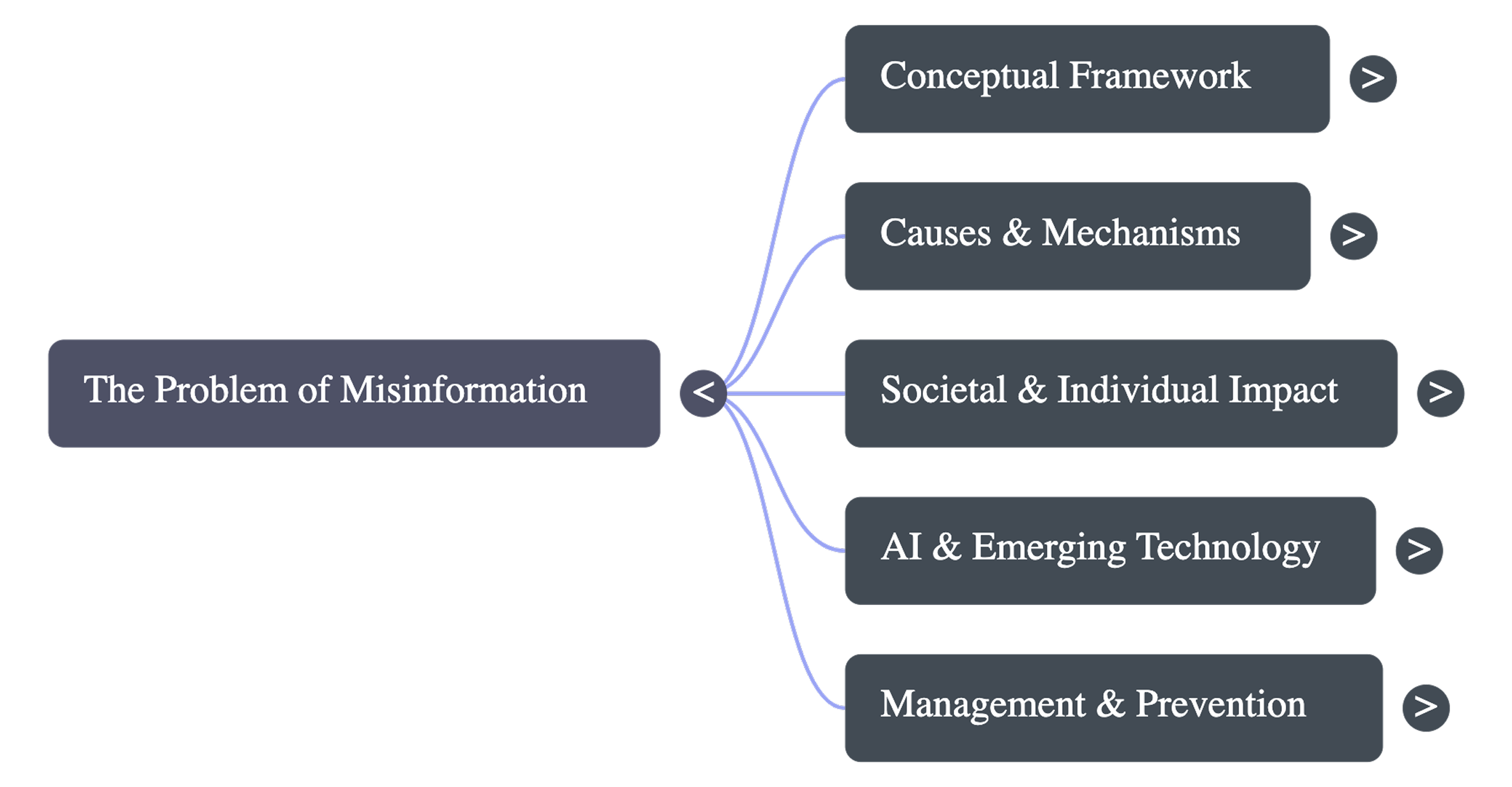
The research confirmed one central tension: the problem is not a lack of information — it is a lack of a trustworthy frame for understanding it. Misinformation spreads not because facts are unavailable, but because the infrastructure for presenting them impartially does not exist at scale. PoliFacts needed to become that infrastructure.
What the research shifted — Week 4
The approach to the project changed this week. I moved from thinking about communication between two individuals to focusing on a single individual's bias being challenged — opening the possibility of reflection and possible change from a rooted belief. What was also highlighted was the possibility for a mutual space to build connection.
How might we bridge between politically polarized citizens to build unity when discussing opposing views?
How might we present citizens with existing factchecking and blindspot resources using social media?
How might we design an intermediary to notify news viewers of misleading information, actively disrupting confirmation bias?
Narrow
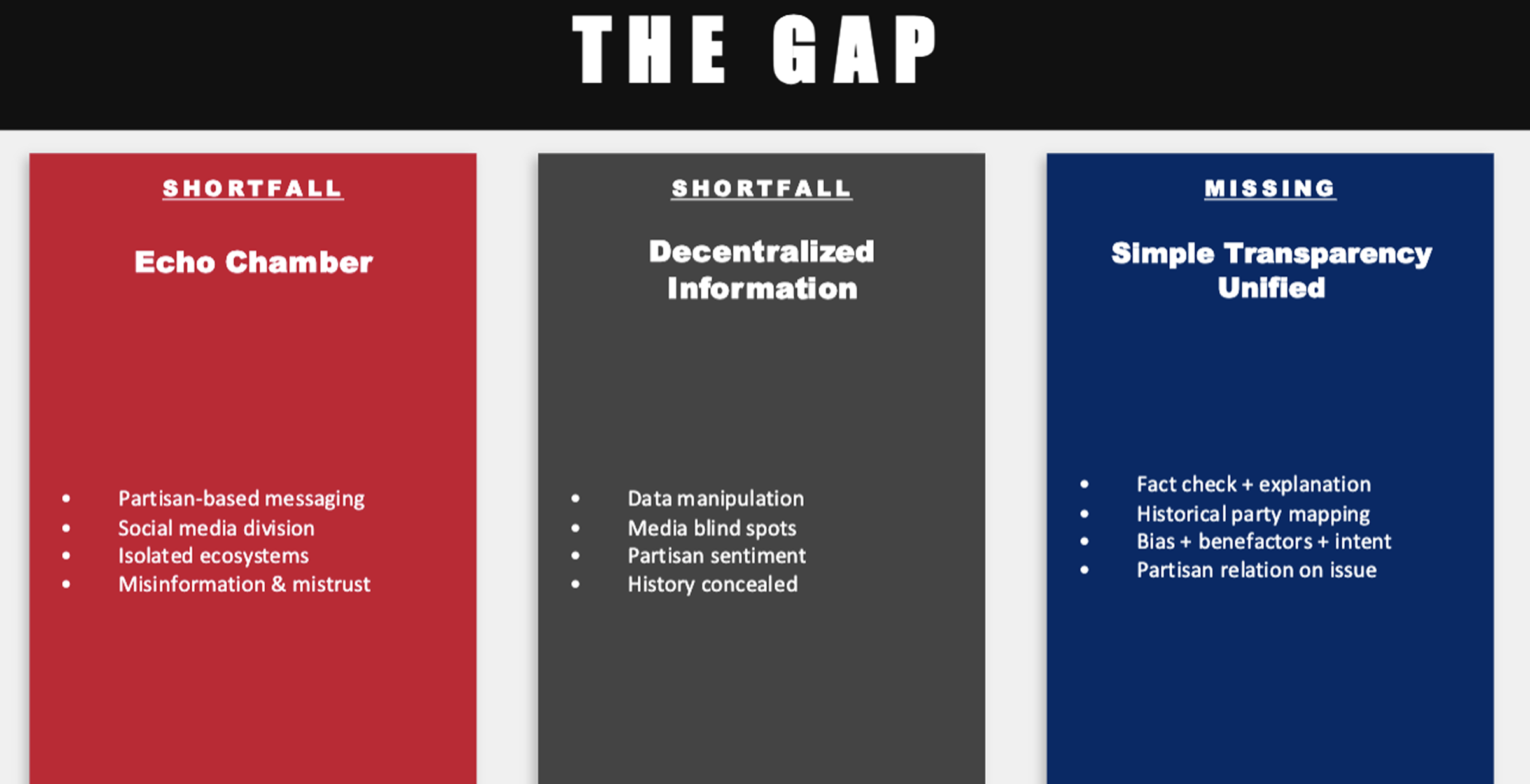
James witnesses a political debate and is unsure of the validity of statements — their intent, history, benefactors, affiliation, and lobbyists. He is not looking to be told what to believe. He is looking for a trustworthy frame to make up his own mind.
Stress test — what Claude pushed back on
"Your research already told you that fact-checking alone doesn't shift rooted beliefs. What does your tool do differently that actually moves James, rather than just informing him?"
Continued
"Synthesizing how much information? James is already overwhelmed by abundance. What is the mechanism that makes your synthesis feel like relief rather than more noise? And if the tool surfaces his own bias first — why would he answer framing questions honestly before he trusts it?"
What it opened
The trust problem became the core design constraint. The tool couldn't ask James to reveal his bias before earning his trust. The sequence mattered: factual synthesis first, bias surfacing later, connection mapping as the expanding layer.
The continued division in our civilization and families is a complex issue buried under misinformation, algorithmic separation and partisan bias. To bridge division, we need to have salient conversations that overcome uncomfortable polarizations in order to move forward together. Through cross cultural analysis and building visuality through anthropology, I have grown to realize the requirement of a greater understanding of the interconnected relationships of a society. Forming a greater picture with fuller context to be both informed and transparent as a collective will lead to better connection as a whole.
Implement
The first making move was generative, not definitive. Five directions were stress-tested. Two felt uncomfortable. Claude's biggest pushback became the core design problem.


The tool shows you your own bias first. Before any fact-checking, it asks framing questions and surfaces likely blindspots — making the tool a mirror before it is a map.
Nothing is labeled true or false. Instead of verdicts, the tool shows only source relationships and who benefits from a claim — leaving the conclusion to the user entirely.
The map has no end state. There is no "fully informed" — the tool is designed to always surface one more unresolved connection, making incompleteness the message. Does that serve the user, or frustrate them?
What Claude flagged
"You're now collecting two things simultaneously — the user's bias profile, and their query. Those are useful together, but they create a trust problem. Your user is already uncertain and potentially suspicious of misinformation. Why would they answer framing questions honestly if they don't yet trust the tool?"
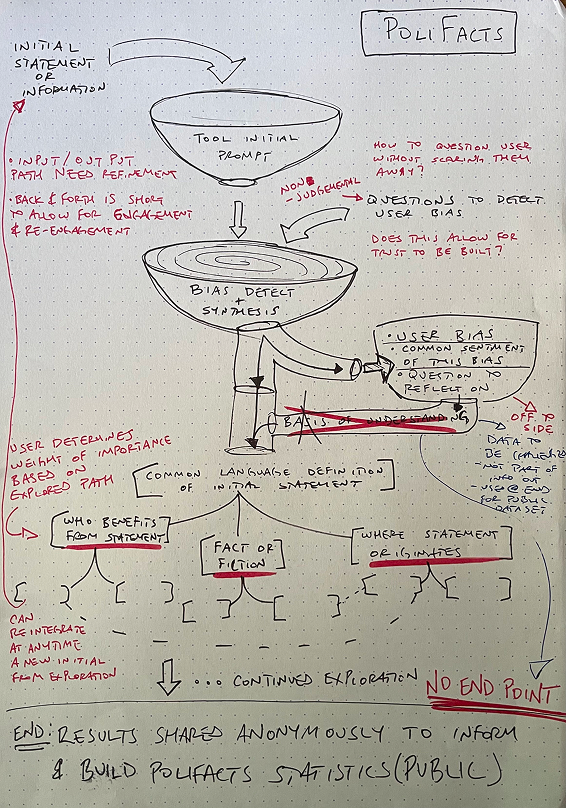
Export — what the first loop revealed
The initial exploration revealed elements that need to be addressed in the functioning and planning of this project; but also produced encouraging results to the viability and assistive nature of a tool like this. Claude pushed back on my drawing in two areas: presenting the user with their own bias up front, and publicizing the information. Where it pushed back on is how the bias is or is not fed back into the system and who it informs, as well as who is in control of the information. These exposures allowed me to consider how to further constrain and ensure the AI's neutrality — not to conform to a bias or convince a user, but rather to present the user with their own bias and then present impartial information, which can then be used to generate publicized metrics of overlap between questions, bias and explored paths.
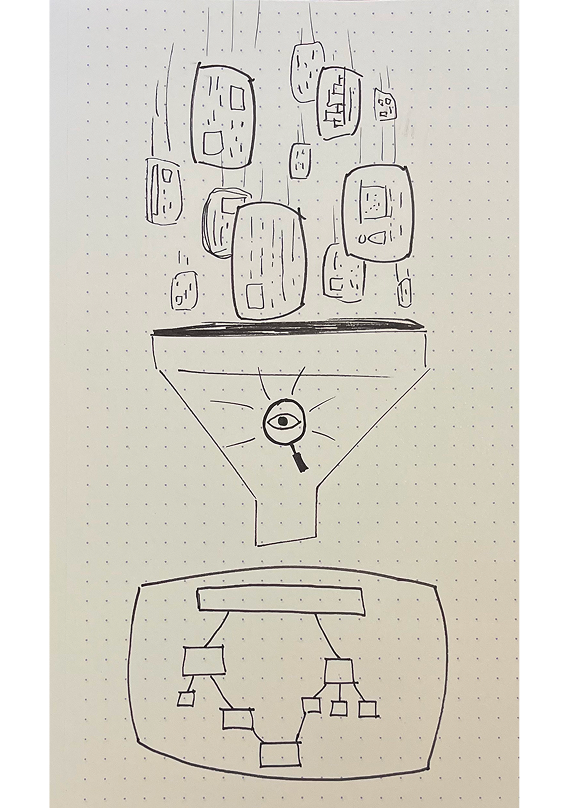
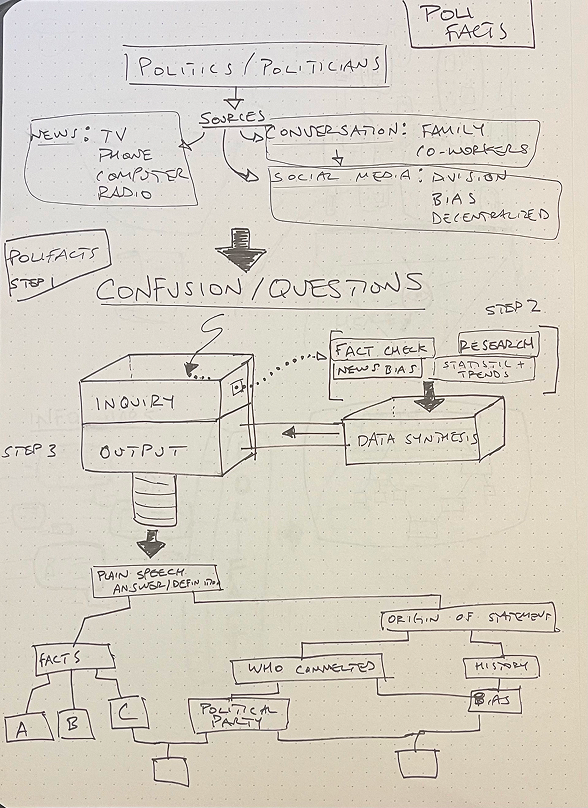
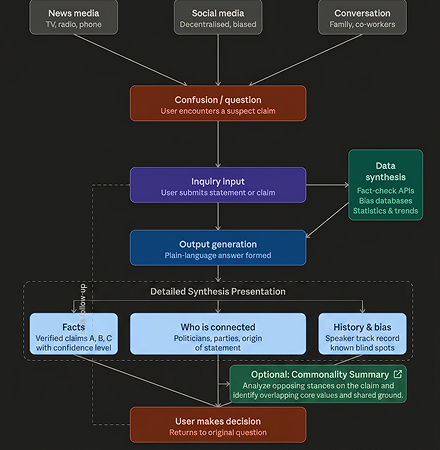
Two states: the moment of input and confusion, and the synthesized view after PoliFacts has run. Not resolution — a more navigable landscape.
Input State
James's entry point: a political statement, a name, a moment of confusion. The tool receives the query without imposing a direction.




Synthesized State
PoliFacts running: impartial information surfaced, bias sources mapped, political connections visible. The user has more to work with than before — and the tool has taken no position.




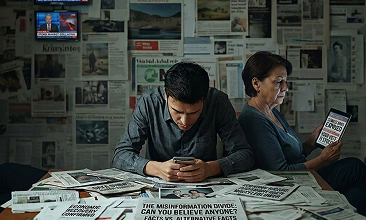
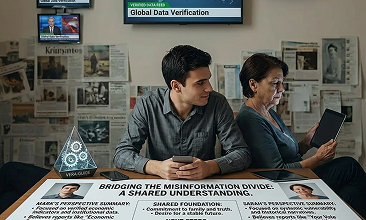
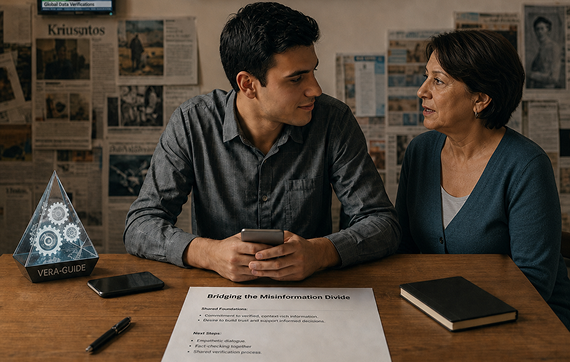
Three crop approaches for the PoliFacts hero image — testing landscape, portrait, and square formats against the project's register.
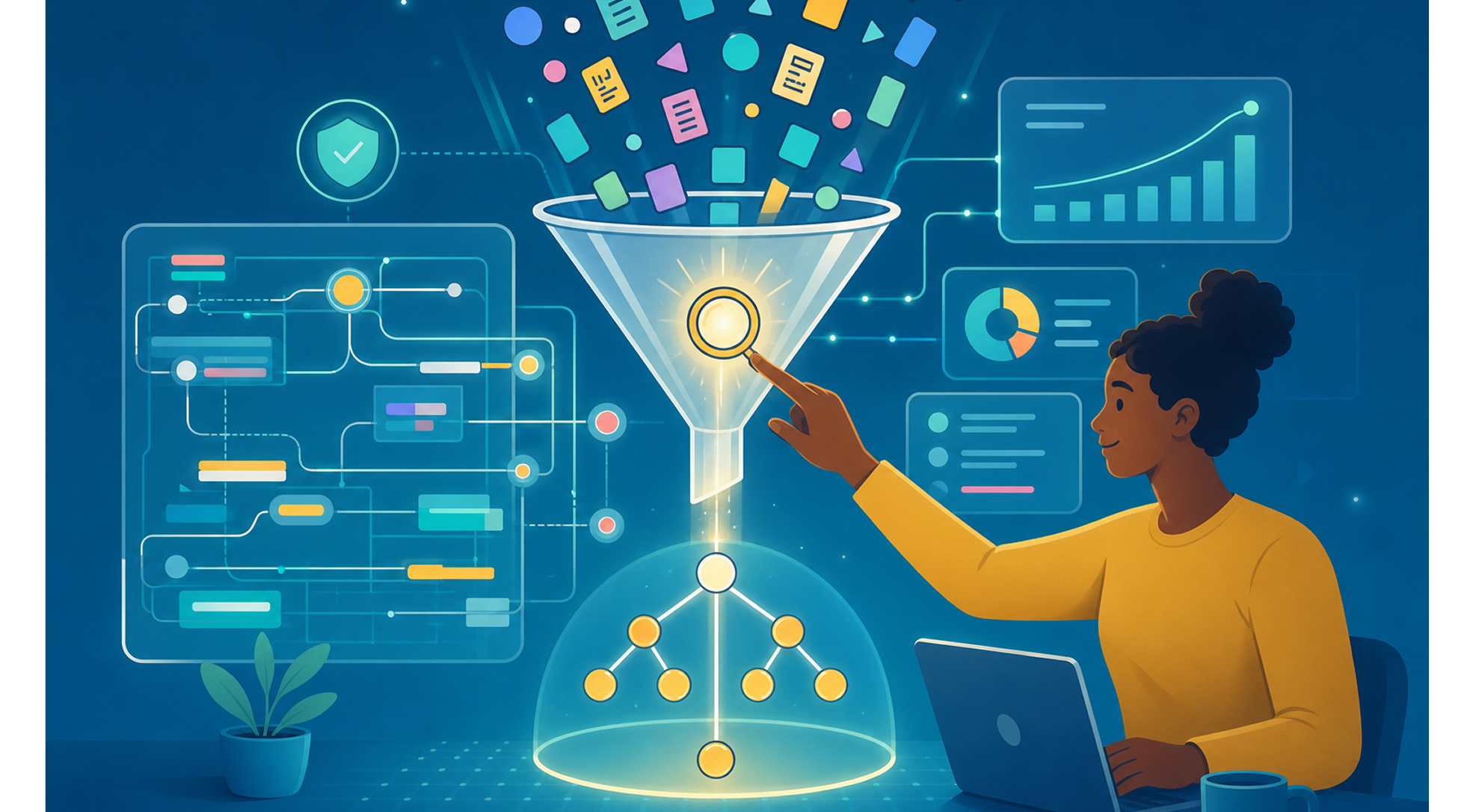
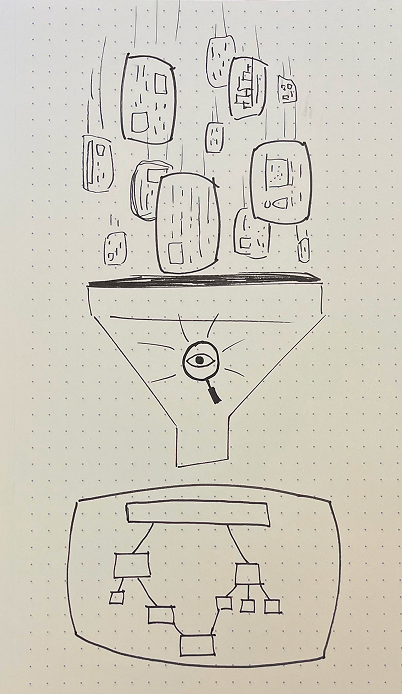
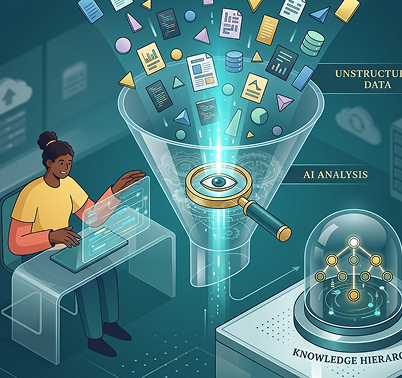
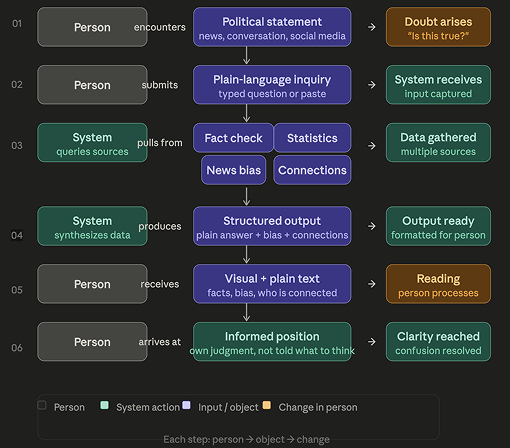
PoliFacts is not a search tool — it is a synthesis system. The schematics show how input, bias detection, impartial synthesis, and expanding map work together as a sequence.
When James is in a moment of political confusion after witnessing a debate, PoliFacts produces clarity because it separates factual data from known bias and makes source relationships visible — not resolving the uncertainty for him, but equipping him to resolve it himself. Impartiality is the mechanism: the tool refuses to conclude, so the user must.
What making it taught
It is important for the tool itself to contain a loop that informs bias to the user, but also that expands in an intuitive manner — showing connections without becoming cluttered and too noisy.
Evaluate
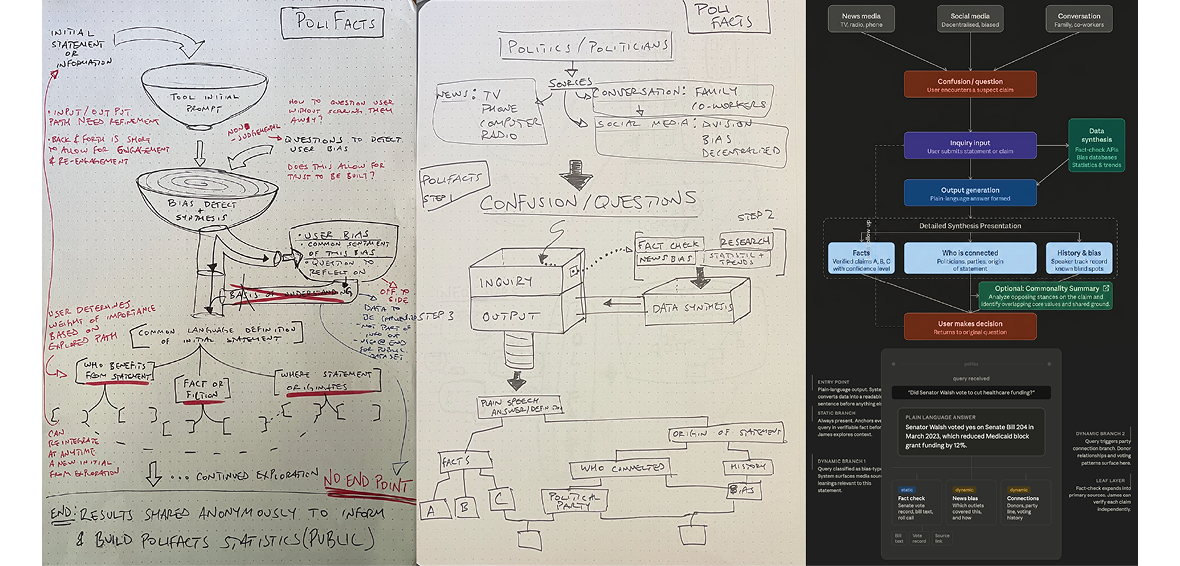
Claude has the ability to help in ways that ChatGPT was limited in — helping expand on an idea while pointing out potential issues or misunderstandings. Configuring a thinking partner that wouldn't take a political stance and wouldn't let a session close without a next step changed what the research phase felt like. The design problem stopped being "what should the tool do" and became "what should the tool refuse to do."
Working with AI as a constrained thinking partner — not a generator — taught me that the most important design decisions in this project were about exclusion: what PoliFacts doesn't decide, what it doesn't label, what it refuses to conclude. Impartiality is a design constraint, not a default.
Before
The first examples that come to mind of early encounters with AI were in cult classic movies — Terminator and The Matrix — both expressing a deep collective fear of AI's inevitable takeover. SkyNet, the T-800, the machines harvesting humans for power. AI as extinction event or as the hidden infrastructure of a false world. That was the frame I came in with.
Now
AI is still a complex concept — but more as a question of who controls the information than as an extinction event. The question PoliFacts is inside is not whether AI can be neutral, but whether a tool built with AI can be constrained enough to serve the user's thinking rather than replace it.
Class Gallery
Not polished — real. Hero image iterations, interface states, annotated artifacts, and system diagrams from the PoliFacts development process.
Hero image iteration — early visual direction for PoliFacts.
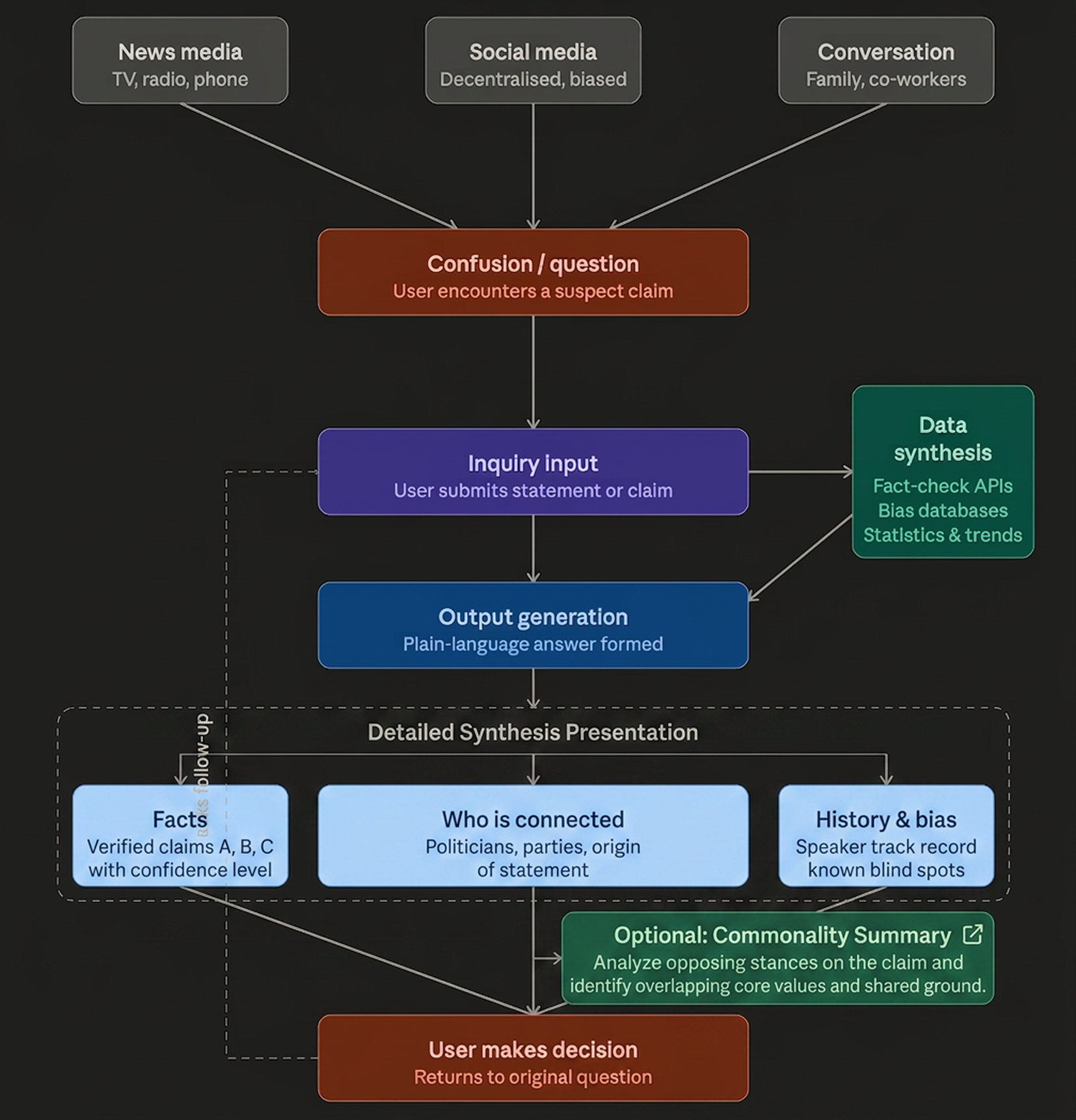
Hero image iteration — testing visual register and tone.
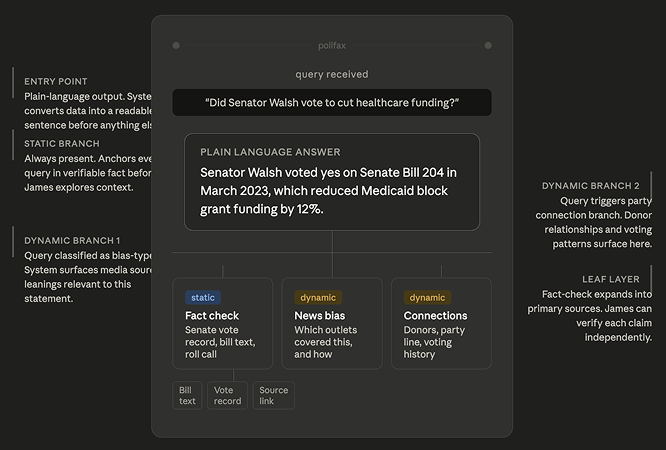
Annotated artifact — first PoliFacts prototype with feedback layer.

GENIE generation round — exploring the tool's visual language.
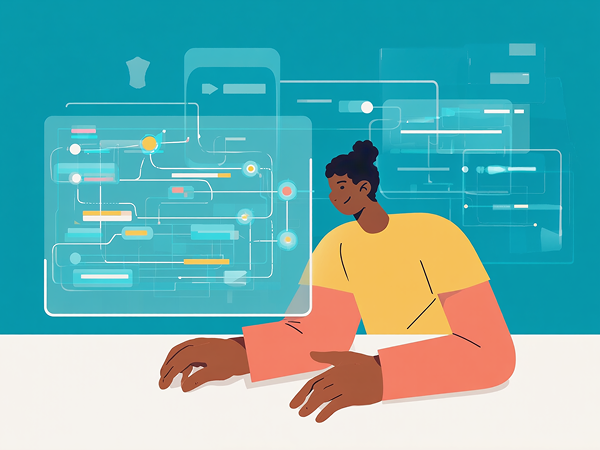
Example breakdown — annotating what each generation held and what it didn't.
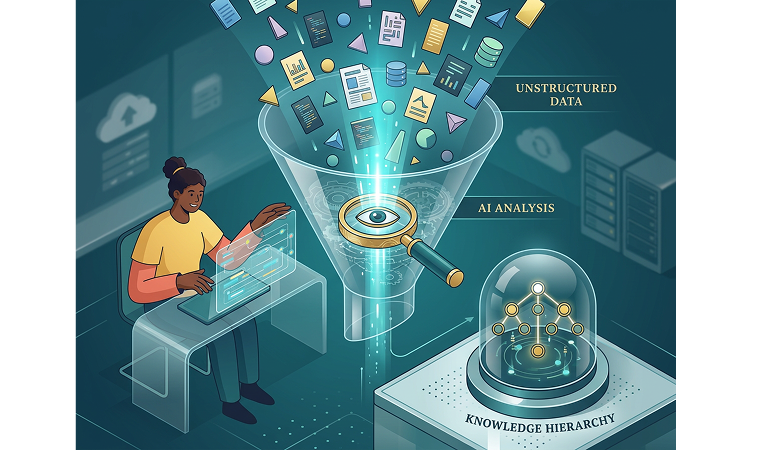
System diagram exploration — how PoliFacts's layers connect as a sequence.